News&Knowledge from SgQ
Which Glass Color Should West-, South-, and North-Facing Homes Use? Choose the Right Glass Color to Keep Your Home Cool
The right glass for your home depends on the direction your windows face. West-facing windows receive the strongest afternoon sunlight, so green, gray, or reflective glass is recommended, with Low-E glass as an additional option. North-facing windows receive softer light, so clear or light green glass can be used to allow natural light in rather than focusing mainly on sun protection.
✍️ Written by: SGQ Team (SmartGlassQuality Khlong Sam)
📅 Last Updated: June 24, 2026
- Why Does Your Home’s Sun Direction Affect Glass Color Choice?
- West-Facing Home — Which Glass Color Should You Use?
- South-Facing Home — Which Glass Color Should You Use?
- East-Facing Home — Which Glass Color Should You Use?
- North-Facing Home — Which Glass Color Should You Use?
- Glass Color Selection Table by Sun Direction
- Does Darker Glass Really Help Reduce Heat?
- Which Glass Color Won’t Make Your Home Feel Dark?
- If Your Home Gets Very Hot — What Else Should You Consider Besides Glass Color?
- Summary: Which Glass Color Should You Choose for Each Sun Direction?
- Frequently Asked Questions (FAQ)
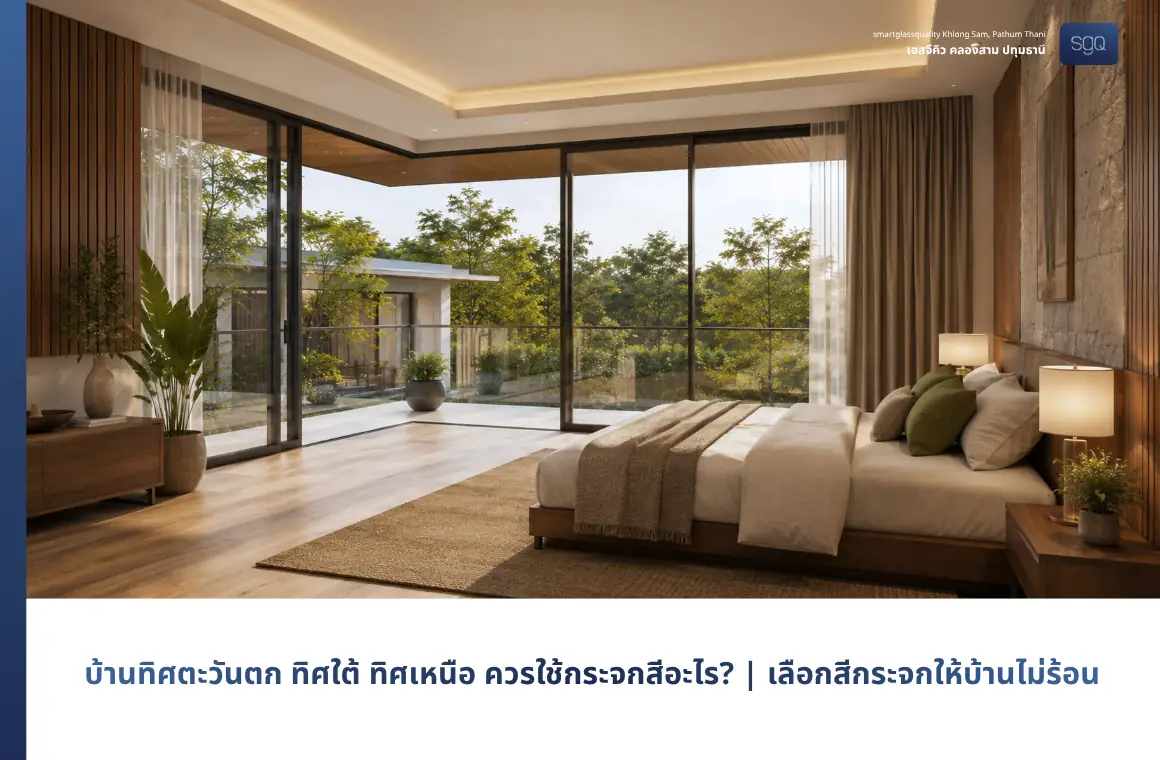
One important factor that many people overlook is the direction the windows face. West-facing and north-facing homes require different types of glass because they receive significantly different levels of light and heat.
This article will help you choose the right glass color based on sun direction, along with recommendations on when glass color alone may not be enough and when you should upgrade the glass type as well → Read the full overview of all glass colors: Choosing Glass Colors for Home Windows
💬 Not sure which glass color is right for your home?
The SGQ team can help analyze the sun direction and recommend the right glass color and glass type for your home for free.
💬 Line: @sgqklongsam |
📞 099-392-1963 |
Why Does Home Direction Affect Glass Color Selection?
Thailand is located in a tropical region where the sun moves along the southern path, causing each direction to receive noticeably different levels of sunlight and heat:
- West: receives afternoon sun from 1:00 PM to 6:00 PM. This is the strongest and hottest sunlight of all directions. Homes with large doors or windows facing this direction will feel very hot in the afternoon.
- South: receives sunlight throughout the day, especially during the hot season. The light is softer than the west-facing direction, but it lasts longer and can accumulate a lot of heat.
- East: receives morning sun from around 6:00 AM to about 11:00 AM. The sunlight is softer than afternoon sun and disappears before the hottest part of the day.
- North: in Thailand, this direction receives very little direct sunlight throughout the year. It mainly receives soft, consistent diffused light, making it ideal for natural brightness without too much heat.
In addition to direction, the size of the opening also matters. The larger the opening, the more heat it receives. A 3-meter sliding door facing west brings significantly more heat into the home than a small window facing the same direction.
💡Before reading further, think about the window or door in your home that “feels the hottest.” That direction is the point where you should choose the glass color and glass type most carefully.
What Glass Color Should a West-Facing Home Use?
West-facing areas are the most challenging direction when choosing glass. During Thailand’s hot season, afternoon temperatures can reach 35–38°C, and the sun sits at a lower angle, allowing sunlight to shine longer and deeper into the home than from other directions.
What the SGQ team recommends for west-facing areas:
- Green glass, medium to dark shade: helps reduce glare and heat well within a manageable budget.
- Gray glass / Euro Gray glass: reduces light about as well as green glass and gives a more modern mood.
- Reflective glass: reflects sunlight and heat before they enter the home, making it suitable for large panels or glass walls.
- Low-E glass: the best option if your budget allows, as it helps reduce heat without making the home look dark.
🌅 West-Facing Direction — The Strongest Afternoon Sun
⚠️ Main problem: afternoon heat, strong sunlight, and low-angle sun that can shine deep into the house.
✅ Recommended: green, gray, reflective glass / choose Low-E glass if your budget allows.
❌ Avoid: large clear glass panels, especially without an awning or curtains.
What the SGQ team recommends for west-facing areas:
- Green glass, medium to dark shade: helps reduce glare and heat well within a manageable budget.
- Gray glass / Euro Gray glass: reduces light about as well as green glass and gives a more modern mood.
- Reflective glass: reflects sunlight and heat before they enter the home, making it suitable for large panels or glass walls.
- Low-E glass: the best option if your budget allows, as it helps reduce heat without making the home look dark.
⚠️ For large sliding doors on the west-facing side, glass color alone is often not enough.
You should also consider: glass type (Low-E), glass thickness (at least 6 mm), exterior awnings, and blackout curtains.
What Glass Color Should a South-Facing Home Use?
☀️ South-Facing Direction — All-Day Sunlight and Heat Build-Up
⚠️ Main problem: long hours of sunlight and accumulated heat, especially during the hot season.
✅ Recommended: green, blue, or gray glass / Low-E or reflective glass if your budget allows.
❌void: large clear glass panels during the hot season, or very light-colored glass if there is no awning.
South-facing areas are not as hot as west-facing areas, but they receive sunlight for a longer period. For glass selection:
- Green or gray glass: sufficient for homes with awnings or trees that help provide shade.
- Low-E or reflective glass: suitable if the home does not have other elements to help block sunlight.
- Blue glass: an option that helps reduce light moderately while giving a cooler tone.
If a south-facing home has large trees, extended awnings, or nearby building structures that provide partial shade, light green glass may be selected without needing to upgrade the glass type.
What Glass Color Should an East-Facing Home Use?
🌄 East-Facing Direction — Softer Morning Sun
⚠️ Main problem: bright morning light, but softer than afternoon sun and disappears before the hottest part of the day.
✅ Recommended: clear, light green, light blue / light bronze if privacy is needed.
❌ Avoid: all very dark glass colors, as they can make the home unnecessarily dark.
Morning sun from the east in Thailand is not as intense as afternoon sun and disappears before the temperature reaches its peak, giving you more flexibility when choosing glass colors:
- Clear glass: suitable if you want full morning light, such as for a dining room or a relaxing corner that enjoys soft morning sunlight.
- Light green glass: balances natural light and glare reduction, making it suitable for a home office or bedroom facing east.
- Light blue glass: adds a fresh morning tone and suits rooms that need a modern look.
- Light blue glass: adds a fresh morning tone and suits rooms that need a modern look.
Another factor to consider is how the room is used. If it is a bedroom where you want to sleep in, choose a slightly darker shade. But if it is a living room where you enjoy morning light, clear or light-colored glass is a better choice.
What Glass Color Should a North-Facing Home Use?
🌤️ North-Facing Direction — Soft, Consistent Light with No Direct Sunlight
⚠️ Main problem: this direction receives less light than all other directions, so the home may feel dark if dark glass is selected.
✅ Recommended: clear, light green, or light blue glass — focus on bringing in natural light.
❌ Avoid: dark bronze or dark gray glass, as they can make the home dark without providing much benefit.
In Thailand, north-facing areas receive very little direct sunlight throughout the year. They mainly receive soft, consistent diffused light, making them ideal for rooms that need natural light without too much heat.
- Clear glass: the best option for north-facing areas because the natural light is already not too strong.
- Light green glass: suitable if you still want to reduce some light or need a little more privacy.
- Light blue glass: suitable if you want to add a cool and refreshing tone.
- Dark bronze or dark gray glass is not recommended because north-facing areas already receive less light, and dark glass can make the room unnecessarily dark.
Glass Color Selection Table Based on Sun Direction
💡 Homes with windows facing multiple directions can use different glass colors for each direction. It is not necessary to use the same glass color throughout the entire house.
Glass Color Selection Table Based on Sun Direction
This is one of the most common misunderstandings when choosing glass, and it should be explained directly:
- Dark-tinted glass ✅ helps reduce glare and the amount of visible light entering the home.
- Dark-tinted glass ⚠️ can reduce some heat because less light enters the home.
- Dark-tinted glass ❌ is not the main solution for heat reduction. In some cases, dark glass absorbs heat and radiates it to both sides, making the aluminum frame and nearby areas hotter.
Glass that truly reduces heat is glass with a low Solar Heat Gain Coefficient (SHGC), which is a property of the “glass type,” not the “glass color”:
- Low-E glass: has a coating that reflects heat radiation before it enters the home, helping significantly reduce SHGC.
- Reflective glass: has a surface that reflects light and heat away, making it suitable for homes that receive strong direct sunlight.
- Double glazing (IGU): the air or gas gap between the glass layers acts as thermal insulation and provides the best heat reduction.
⚠️ Summary: If the main goal is heat reduction, the glass type is more important than the glass color. Choose the color as a secondary factor, but choose the glass type first.
What Glass Color Keeps a Home from Looking Dark?
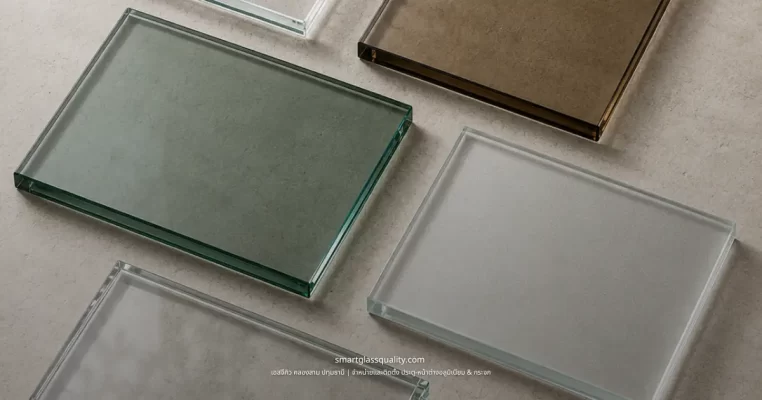
If you want sun protection while still maintaining brightness, the order from brightest to darkest is:
💡 To keep your home from feeling dark, choose a glass color with a relative brightness of at least 60% — and address heat reduction through glass type, not by going darker and darker.
If Your Home Gets Very Hot, What Should You Consider Besides Glass Color?
Glass color is only one of many factors in a complete heat-reduction system:
→ Read more: Types of Glass for Aluminum Work Complete Guide to All Glass Types
The simple rule is: directions that receive strong sunlight should use darker glass colors or upgraded glass types, while directions with less light, such as the north-facing side, should use light-colored or clear glass to prevent the home from feeling dark. If your home has windows facing multiple directions, it is not necessary to use the same glass color throughout the entire house.
 0:33
0:33
SGQ SHORT TIPS
If you are building a home in Thailand, choosing the wrong glass = living uncomfortably for many years.
Homes in Thailand have to deal with sunlight, heat, and glare. Choosing the right glass type from the beginning can help make the home more comfortable, reduce heat build-up, and better support long-term use.
Watch the video on YouTube🌡️ Is your home very hot? SGQ can help analyze sun direction and recommend the right glass for free.
Not sure which glass color to use, or whether you should upgrade to Low-E glass?
The SGQ technician team can give recommendations based on your home direction.
📖 Related Articles
Choosing Window Glass Colors for Your Home: Bronze, Blue, or Green Which One Is Best?
Overview of all glass colors with practical selection criteria
How Are Bronze, Green, and Blue Glass Different? Which Color Is Best for Your Home?
A detailed comparison of the 3 most popular glass colors before placing an order.
Types of Glass for Aluminum Work: Complete Guide to Every Type
Glass color and glass type are different — see the glass types that truly help reduce heat here.
Installation service with recommendations on the right glass color and glass type for your home direction.
Installation service with recommendations on the right glass color and glass type for your home direction.
Summary: How Should Each Home Direction Choose Glass Color?
- West-facing direction (hottest) — choose green, gray, or reflective glass + consider Low-E glass. Avoid large clear glass panels without an awning.
- South-facing direction (long hours of sunlight) — choose green, blue, or gray glass based on how open and bright you want the space to feel.
- East-facing direction (softer morning sun) — clear, light green, or light blue glass, with more flexibility in color selection.
- North-facing direction (soft light) — choose clear or light-colored glass. Dark glass is not recommended because it can make the home unnecessarily dark.
- For serious heat reduction, glass type must be considered together with color, such as Low-E, reflective glass, or IGU. Glass color alone is not enough.
- Multi-Direction Homes — You Can Choose Different Glass Colors for Each Direction. You Don’t Need to Use the Same Color for the Entire House.
Frequently Asked Questions: Which Glass Color Helps Keep a Home Cool?
1. Do homes with both west-facing and north-facing windows need to use the same glass color?
No, it is not necessary. It is recommended to choose different glass colors based on each direction. For example, west-facing areas can use dark green or reflective glass to reduce afternoon sunlight, while north-facing areas can use clear or light green glass to allow more natural light in. Using the same glass color throughout the entire house may cause one direction to perform less effectively. However, the colors should stay within the same tone group so the home still looks cohesive from the outside.
2. Can a west-facing home without an awning solve heat problems by changing the glass alone?
Changing the glass can help a lot, especially when upgrading from standard clear glass to Low-E or reflective glass, which reduces heat more noticeably than changing the glass color alone. However, if a west-facing home has no awning at all, the result will be better when Low-E glass is used together with heat-reducing curtains, because afternoon sun in Thailand is very intense, and solving only one point may still not be enough.
3. What glass color should an east-facing bedroom use if you want to sleep in?
For an east-facing bedroom where you want to sleep in, light to medium bronze glass is recommended. Although morning sun is not as intense as afternoon sun, it can shine into the bedroom from around 6 AM. Bronze glass helps reduce light and increase privacy at the same time. If you want additional light control, blackout curtains can also be added.
4. Does a south-facing home with large trees providing shade still need dark-tinted glass?
If the trees provide real and consistent shade throughout the day, very dark glass is not necessary. Light green glass or clear glass may be enough because the trees already help filter sunlight before it reaches the glass. However, you should also consider that the trees may grow larger or be trimmed in the future. If you are unsure, choosing medium green glass first will offer more flexibility.
5. Should a second-floor west-facing home and a first-floor west-facing home use the same glass?
They should use the same or similar glass because both receive afternoon sun. However, the second floor may be slightly more affected because it does not have the lower-floor awning to help provide shade. If the budget is limited, prioritize Low-E or reflective glass for the second floor first, as it receives more direct sunlight and the room temperature can become higher.
About the Author
Written by the SGQ Khlong Sam Team Supplier and installer of glass and aluminum products in Pathum Thani, Bangkok, and nearby provinces. Information is based on real on-site experience and manufacturer data.
For Aluminium Contractors & Installers
If you need aluminium profiles, quality glass, premium hardware, custom cutting & fabrication, installation tools, or on-site technical advice,
you can contact us at:
• Line : https://lin.ee/Wkn1Ong
• Tel : 081-885-2629
• Facebook : Smartglassquality
For Homeowners & Project Owners
If you are looking for aluminium door–window installation, glass works, sliding and swing systems, room partitions, or high-quality materials for home renovation
you can contact us at:
• Line : https://lin.ee/Wkn1Ong
• Tel : 099-392-1963 , 097-936-1449