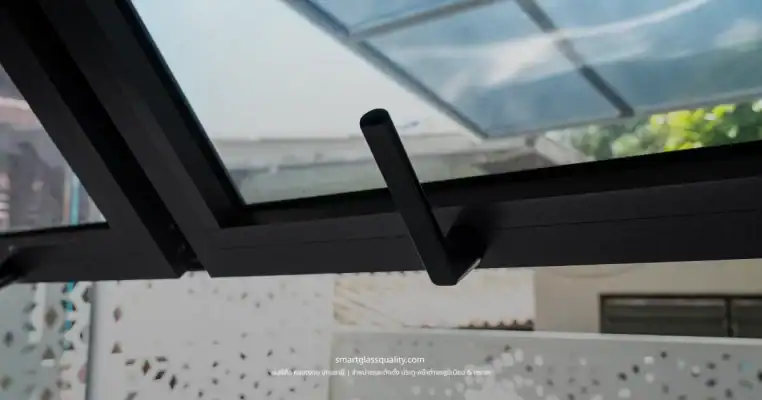
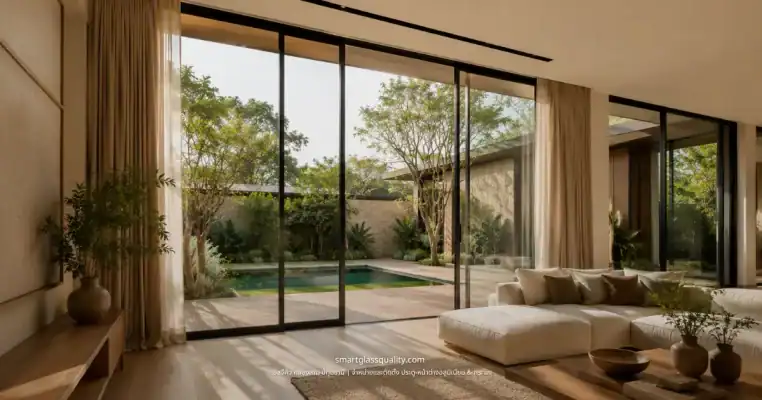
News&Knowledge from SgQ
What Is Aluminum? A Deep Dive into the Lightweight yet Strong Material That Changed the Construction World
Aluminum is a metal extracted from bauxite ore. It is lightweight yet strong, rust-resistant, weather-resistant, easy to maintain, and 100% recyclable. It is widely used in construction and modern door and window systems because it can be formed into various shapes, offers a beautiful design, and has a long service life of more than 10–20 years.
✍️ Written by: SGQ Team (SmartGlassQuality Khlong Sam)
📅 Last updated: June 19, 2025
- The Origin and Production of Aluminum
- Why Is Aluminum So Popular in Construction?
- Aluminum in Doors and Windows
- Aluminum in Modern Home Construction
- Aluminum and the Environment: Endless Recyclability
- New Technologies in Aluminum Extrusion
- Things Contractors and Homeowners Often Overlook
- Aluminum — The All-Around Material That Answers Every Need
- Summary: What Is Aluminum?
- Frequently Asked Questions (FAQ)
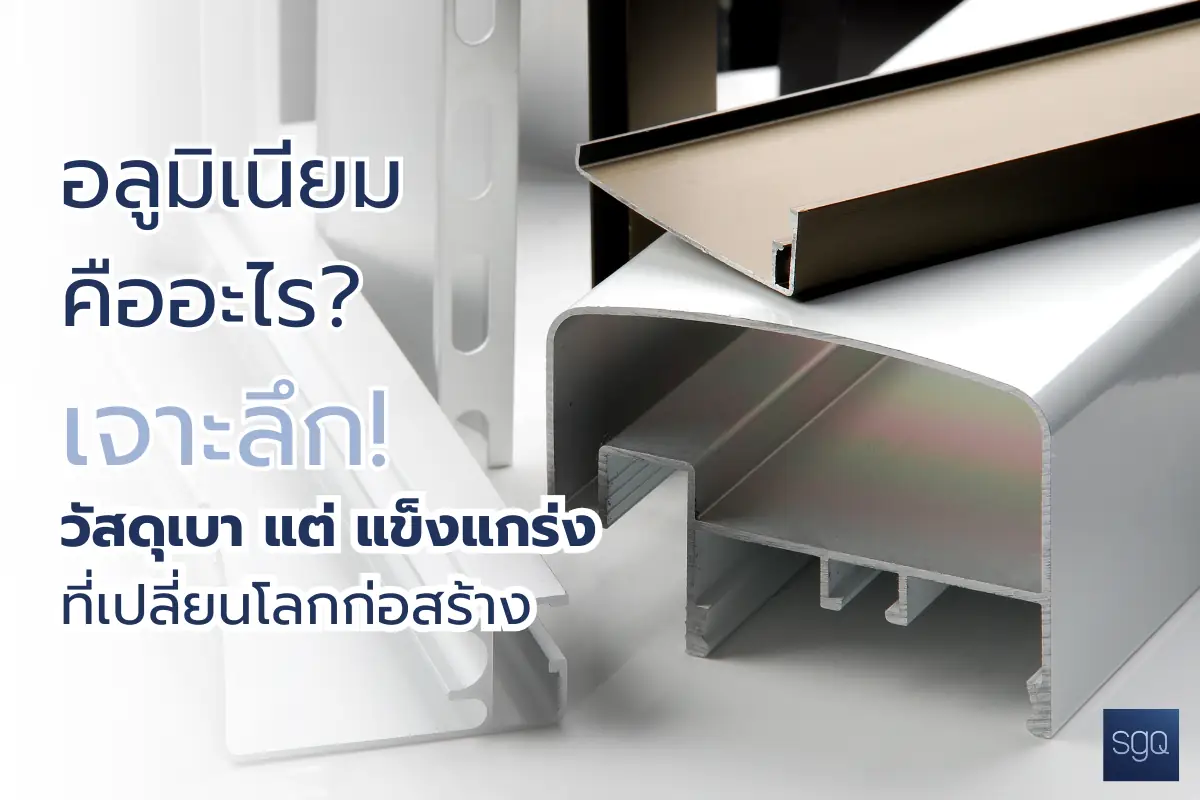
Today, construction and residential design must meet the needs of strength, beauty, and sustainability. “Aluminum” has truly become a leading material in the construction industry. With its unique properties that outperform many other materials, aluminum is lightweight yet strong, weather-resistant, rust-resistant, and most importantly, can be formed into various shapes to match different design requirements.
Today, aluminum in construction is widely used not only for large building structures but also for important elements such as door and window materials, which require precision and accuracy during installation. Aluminum perfectly meets both functional and aesthetic needs.
This article will give you a deeper understanding of aluminum, from its origins, production process, and everyday applications to its role in modern construction and the environment, which everyone now values.
🔧 Looking for quality aluminum profiles for construction or home projects?
SGQ Khlong Sam stocks ORM, Fuji Metal, and Schimmer — full profile range with free expert advice
📞 081-885-2629 |
💬 Line: @sgqklongsam
Origin and Production of Aluminum
Aluminum is a metal that does not occur naturally in a ready-to-use form. It must go through several extraction and production processes, from bauxite ore to finished aluminum profiles ready for actual use.
Although aluminum is commonly found in everyday life, it is not mined in a form that can be used immediately. This material starts from a natural ore called bauxite, which is the main raw material for aluminum extraction. Bauxite is usually found in shallow soil layers and is abundant in tropical countries such as Australia, Brazil, and Indonesia.
Where does aluminum come from, and what is bauxite?
Aluminum is extracted from bauxite, the main raw material. It is found in shallow soil layers in tropical countries such as Australia, Brazil, and Indonesia.
Aluminum production begins by processing bauxite ore through the “Bayer Process,” which separates alumina (Al₂O₃) from bauxite using caustic soda (NaOH) and heat. The alumina is then processed through “Electrolysis,” or electrical separation, in large smelting furnaces to produce pure aluminum in molten metal form.
Once pure aluminum is obtained, it enters the casting and processing stages to become various products such as sheets, bars, or profiles. Aluminum profiles, in particular, are widely used in structural work, door and window systems, and frame applications because they are lightweight, rust-resistant, and can be formed into various shapes.
How is aluminum produced from ore into usable profiles?
Aluminum production begins with the Bayer Process to separate alumina from bauxite. The alumina then goes through electrolysis in large smelting furnaces to produce pure aluminum before being processed into sheets, bars, or aluminum profiles for structural applications.
In the past, aluminum production was one of the most energy-intensive industries. Today, however, technology has become more efficient, and old aluminum can be recycled to produce new aluminum using up to 95% less energy compared with production from bauxite ore. This makes aluminum a strong, energy-saving, and environmentally friendly material.
Whether viewed as a construction material or from the perspective of natural resource conservation, understanding the origin of aluminum profiles helps users choose materials with better knowledge and supports sustainable long-term use. → View details of high-quality aluminum profiles
Why is the aluminum production process important?
The traditional aluminum production process used a very high amount of energy. Today, aluminum can be recycled using only 5% of the energy required for new production, making it both strong and environmentally friendly.
Why is aluminum widely used in construction?
Aluminum meets the needs of modern construction in three key areas: strength, beauty, and long-term value. It offers advantages over steel and wood in many important aspects. Aluminum has become a preferred choice for many projects, from high-rise buildings and residential homes to door and window systems.
Aluminum properties that meet the needs of modern construction
The most outstanding properties of aluminum are that it is lightweight yet highly strong, easy to form, modern and attractive, and easy to maintain. It does not require anti-rust painting or repeated lacquer coating like other materials. One of the main reasons aluminum is widely used is its properties that outperform many other construction materials, such as:
- Lightweight yet highly strong, helping reduce the load on the main building structure. Easy to form, making it suitable for work that requires precision and accuracy, such as door and window frames.
- Beautiful, modern, and compatible with many design styles.
Why does aluminum not rust, and how does it withstand weather conditions?
Another key advantage that makes aluminum stand out from other materials is that it does not rust. This is because aluminum naturally forms a thin layer of aluminum oxide on its surface when exposed to air. This protective layer helps prevent corrosion, unlike ordinary steel. It can withstand strong sunlight, strong winds, heavy rain, and high humidity.
In addition, aluminum offers excellent weather resistance. Whether exposed to strong sunlight, strong winds, heavy rain, or high humidity, aluminum maintains its shape without swelling, expanding, or warping. This makes it highly suitable for exterior applications such as front doors, windows around the house, louvers, and canopy frames.
Is aluminum cost-effective in the long term and 100% recyclable?
Although aluminum may have a higher initial cost than some other materials, its durability and long service life make it cost-effective in the long term. It reduces the need for frequent repairs or replacement. More importantly, aluminum can be 100% recycled without losing quality, helping reduce construction waste and supporting the sustainable construction trend that is gaining attention worldwide.
Comparison Table of Construction Materials: Aluminum vs Steel vs Wood
Aluminum for Doors and Windows: More Than Just Beauty
Aluminum doors and windows are not only attractive materials but also support safety, heat insulation, sound reduction, and long-term use without frequent maintenance. Materials used in key construction elements, such as aluminum doors and windows, have become an important part of achieving design, safety, and quality of living. Aluminum is not just a material that “looks good,” but a truly practical choice for modern homes.
Strong, durable, and reliable for every use. Which door systems can aluminum support?
Aluminum frames can easily handle impact, strong wind, and repeated opening and closing, whether used for sliding, swing, or awning systems. Aluminum sliding doors are especially popular today.
Aluminum sliding doors are especially popular because they are simple, space-saving, and come with smooth, strong tracks that do not bend easily. They can be used for many years without frequent parts replacement.
Safe and reliable to use
Strong aluminum frames also help improve home safety, whether by supporting multi-point locking systems, digital lock installation, or use with safety glass. Aluminum works well with security systems.
In addition, aluminum does not rust, does not rot like wood, and does not spread flames, making it suitable for long-term use both indoors and outdoors.
How does aluminum provide heat and sound insulation?
Aluminum can provide good heat insulation when designed together with quality glass, such as Low-E glass, double glazing, or reflective glass, along with tight rubber seals around the frame. This helps reduce both heat and outside noise effectively.
It can also work effectively as a sound-insulating aluminum system, especially when installed correctly with high-quality rubber seals. This helps reduce outside noise, such as traffic or rain, creating a quieter living environment. → View the Euro Profile system for aluminum door and window applications
Cost-effective in both design and long-term use. How is it better than other materials?
Although the initial cost may be higher than some materials, aluminum doors and windows offer long-term value through their long service life, easy maintenance, and no need for frequent painting or upkeep. They can also be customized with different colors, surface finishes, and profile designs to match various home styles.
Aluminum for doors and windows is not only about appearance. It is a material that combines safety, durability, and living convenience in one solution. For anyone planning to install or renovate a home, choosing high-quality aluminum is a long-term investment that delivers value in both comfort and property value.
Aluminum and Modern Home Construction
Modern homes must meet the needs of convenience, safety, and sustainability. Aluminum has therefore become a key material chosen by modern architects and homeowners because it can be applied to every part of the home, from door frames to ceilings.
Home design is no longer only about beauty. It must also support the changing lifestyles of modern people, including convenience, safety, and sustainable living. Construction materials such as aluminum have become a leading choice for modern homes because they meet these needs in every aspect.
Do modern homes need aluminum as a key element, and where can it be used?
Aluminum is suitable for modern, minimalist, and industrial-style homes because it gives a sleek, modern appearance and can be formed into many applications, from ultra-slim door frames and sun-shading louvers to ceilings and fences. Aluminum can also be shaped for many decorative applications, such as:
- Ultra-slim door and window frames
- Vertical sun-shading louvers
- Aluminum ceilings
- Fences
- Outdoor furniture that requires durability
What are aluminum systems beyond just profile sections?
An “aluminum system” means using aluminum together with fully designed hardware and components that cover function, strength, and aesthetics, such as panoramic sliding door systems, hidden-track folding doors, quiet sliding tracks, and multi-point locking systems.
- Panoramic sliding door systems
- Awning window systems with integrated sliding insect screens
- Hidden-track aluminum folding door systems
- Quiet sliding track systems that help reduce noise when moving the panels
- Multi-point locking systems for added security
All of these help upgrade an ordinary home into a “smart design home” that is easy to use, comfortable to live in, and beautifully modern.
What types of aluminum door and window panels are available, and where are they suitable?
There are many types of aluminum panels on the market, each designed for different functions: sliding panels for saving space, swing panels for a tight seal, folding panels for wide openings, awning panels for ventilation, and fixed panels for natural light. Each type can support various types of glass.
- Aluminum sliding panels: easy to open and space-saving, suitable for homes with limited space.
- Swing/opening panels: suitable for rooms that require a tight and secure closure, such as entrance doors.
- Folding panels: provide the widest opening and connect indoor and outdoor spaces, suitable for resort-style homes.
- Awning panels: provide good ventilation, suitable for bathrooms or kitchens.
- Fixed panels: suitable for areas that focus on natural light and views
All types can be designed to match the home’s color tone and can support many types of glass, including clear, tempered, laminated, and heat-insulating glass.
Aluminum and the Environment: Endless Recycling
In a world where people are paying more attention to sustainable resource use, construction materials that perform well and are environmentally friendly have become a key choice today. One of the most outstanding materials in this area is “aluminum.” It is not only strong and beautifully designed, but also 100% recyclable without losing any quality.
How does aluminum recycling save 95% of energy?
Used aluminum, such as construction profile scraps or beverage cans, can be melted down and produced again into high-quality materials, using only 5% of the energy required to produce aluminum from bauxite ore.
Used aluminum, such as profile scraps from construction work, factory scraps, or even beverage cans, can be melted down and reproduced into high-quality aluminum materials. This process leaves no residual waste and helps reduce landfill waste in the long term.
How can eco-friendly aluminum be truly proven?
Eco-friendly aluminum is not just a concept, but a result that can be proven globally. Many developed countries have systematic collection systems for used aluminum to enter the recycling process. This helps reduce mining and lower environmental impacts, such as deforestation for surface mining or waste emissions from smelting plants.
When consumers choose more environmentally friendly aluminum materials, they are also supporting the circular economy. This not only reduces waste but also helps create a sustainable industry in the long term.
From the perspective of technicians and homeowners: choosing aluminum means choosing the future.
Choosing aluminum for door and window systems or various structures is not only about being durable, rust-resistant, and attractive. It is also about choosing a material that lasts long, can be recycled, and helps reduce environmental impact every day.
For homeowners, this is a worthwhile investment in both durability and environmental responsibility. For technicians and contractors, it means delivering work that reflects both quality and social responsibility.
As the world moves toward a greener direction, aluminum is no longer just a construction material. It has become a symbol of shared responsibility for the planet. Aluminum recycling creates an endless cycle, and every choice to use eco-friendly aluminum is a small step that creates a big impact for the future.
New Technology in Aluminum Profile Extrusion
Today, aluminum is not just an ordinary material. It goes through highly precise and advanced production technology, which directly affects installation quality for doors, windows, and building structures.
Construction material standards are continuously being raised. “Aluminum” is no longer just a general material. It has become a product that must go through technological development in production, extrusion precision, and surface finish quality. All of these directly affect installation quality, whether for doors, windows, or building structures.
How does aluminum profile extrusion work?
Aluminum profile extrusion is the process of pushing an aluminum billet through a die to create the desired shape, such as U-shaped, T-shaped, or custom profiles for door and window systems. Today, automated control machinery, such as CNC and PLC control systems, has been developed to improve millimeter-level precision. This results in beautiful, smooth, straight profiles that do not bend easily and have consistent dimensions in every piece.
Some leading factories also use “Auto Aging” systems to heat-treat aluminum after extrusion, ensuring that the profiles achieve the required strength and shape stability according to the specified grade. → View aluminum thickness standards for construction work
Aluminum production technology that pays attention to every step
Modern aluminum production technology starts from selecting high-quality raw materials, such as pure aluminum billets, to controlling temperature and pressure during the extrusion process.
In addition, premium-grade factories place importance on controlling surface stability and profile cleanliness. These directly affect actual use, such as glass installation, lock system fitting, or compatibility with accessories, allowing everything to fit properly without the need for time-consuming cutting or on-site adjustments.
What are the differences between Powder Coating, Anodizing, and wood-grain aluminum finishes?
There are three main aluminum surface finishing methods: Powder Coating, which provides strong color adhesion and sunlight resistance; Anodizing, which increases hardness and shine; and Sublimation Film Transfer, which creates a wood-grain pattern. Each method offers different results in terms of beauty and durability.
Today, there are various surface finishing techniques, such as:
- Powder Coating: strong color adhesion, sunlight resistance, water resistance, and not easy to peel.ย
- Anodizing: an electrochemical surface treatment that creates an oxide layer to protect against corrosion and enhance shine.
- Sublimation Film Transfer: a wood-grain finish applied to aluminum to add a luxurious look to the home.
Standard surface finishing also helps aluminum resist UV rays, humidity, and Thailand’s weather conditions very well. This ensures long outdoor use without fading or deterioration. → View the guide to choosing aluminum frame colors to match your home
🔧 Interested in Quality Aluminum Profiles? Contact SGQ Khlong Sam Today
ORM | Fuji Metal | Schimmer — Full range of profiles, colors, and door/window systems
Powder Coating | Anodize | Wood Grain — Factory-standard surface finishes
Important Details That Technicians and Homeowners Often Overlook
Although aluminum is strong, durable, and easy to maintain, its simplicity comes with many details that new technicians and even homeowners often overlook without realizing it. These details can affect installation quality, safety, and long-term service life.
How does aluminum thickness affect the work?
Profile thickness directly affects strength, wind-load resistance, and the ability to support glass weight. General windows usually use 1.2–1.5 mm thickness, while large sliding doors or areas exposed to strong sunlight should use 1.8–2.0 mm or thicker.
- For general windows, a thickness of 1.2–1.5 mm may be sufficient.
- For large doors, large sliding panels, or areas exposed to strong sunlight and wind, aluminum with a thickness of 1.8–2.0 mm or more should be used to prevent warping or premature deterioration.
Using the wrong thickness may cause loose panels, poor closing, or even glass slipping out of the frame after a period of use. This is one of the most common aluminum installation problems. → Read more about aluminum thickness | View the guide to slim aluminum frames for modern applications
What aluminum installation problems should not be ignored?
Common problems caused by incorrect installation include misaligned frames, loose water seals, screws that do not match the system, and failure to leave space for thermal expansion. These issues can lead to costly repairs later. Even with high-quality aluminum, problems can still occur if the installation is done incorrectly, such as:
- Misaligned frames, causing stiff opening and closing.
- Loose water seals, allowing water to leak inside.
- Using screws or hardware that are not compatible with the door or window system. Not allowing enough clearance for thermal expansion, which may cause warping or cracking in the future.
Fixing these problems after installation costs money, takes time, and can disappoint customers. That is why accurate, standardized installation from the beginning is essential.
How should aluminum be maintained to last more than 20 years?
Proper maintenance can greatly extend the service life of aluminum. Clean it with mild soapy water, check the rubber seals around the panels, lubricate the tracks 1–2 times a year, and avoid harsh chemicals that may damage the surface coating. Although aluminum is known for being rust-resistant and easy to maintain, proper aluminum maintenance can help extend its service life even further, such as:
- Regularly clean the aluminum surface with a cloth dampened with mild soapy water.
- Check whether the rubber seals fit tightly. If they become hard or cracked, they should be replaced.
- Apply lubricant to moving parts, such as sliding tracks or hinges, 1–2 times a year.
- Avoid using harsh chemicals, as they may damage the aluminum coating and cause fading.
Small but regular maintenance helps prevent future problems and keeps the work looking clean and new. Behind simple-looking aluminum work are details that require attention at every step, from choosing the right aluminum thickness for the site, avoiding installation problems through skilled workmanship, and maintaining aluminum properly. These factors all help ensure high-quality work, reliable use, and fewer repair costs later.
Aluminum: The Perfect Solution for Every Construction Need
Aluminum is a proven material that delivers superior results in many aspects, including strength, design, sustainability, and long-term value. It has become a key choice for both professional technicians and modern homeowners around the world.
One of the most widely recognized materials among technicians and architects is “aluminum.” Whether for doors, windows, canopy walls, or lightweight structures, aluminum is a well-rounded material in every aspect. It is a trusted choice for both professionals and modern homeowners. Choosing aluminum is not just about following a trend, but about choosing a proven material that delivers better results in many ways:
- Strong yet lightweight: reduces the load on the structure without requiring major foundation reinforcement.
- Rust-resistant: suitable for both indoor and outdoor use, withstanding sunlight and rain without swelling or blistering. Versatile design: can be precisely formed to support sliding, swing, and folding systems.
- Easy to install: helps reduce working time and labor costs.
- Easy to maintain: no need for painting or frequent material replacement.
- Recyclable: an environmentally friendly material.
Invest once, use for the long term, and get maximum value. Many people may see aluminum as more expensive than some materials, such as wood or steel. However, when compared in the long term in terms of service life, durability, and maintenance costs, it is clear that aluminum is more cost-effective in every aspect.
- No frequent repairs required.
- No need to worry about termites or rust.
- The work stays beautiful and keeps its shape throughout its service life.
Especially for modern-style homes or homes that focus on simplicity and a contemporary look, aluminum is a material that enhances the design without the need for excessive decoration.
SGQ Khlong Sam: A True Specialist in Quality Doors, Windows, and Aluminum Work
If you are looking for high-quality aluminum with expert advice, SGQ Khlong Sam provides complete services for both technicians and homeowners. If you are looking for quality aluminum using factory-standard profiles, with complete options from ORM, Fuji Metal, Schimmer, and other brands, SGQ Aluminum Khlong Sam is the specialist ready to provide complete consultation for both technicians and homeowners.
- Professional team available for consultation.
- Genuine materials with warranty certificates.
- Complete range of accessories in one place.
📖 Related Articles
Aluminum Profiles: Strong and Durable — How to Choose the Right One for Your Project
Build on your aluminum knowledge and learn how to select the right profile for your specific application
What Is Euro Profile for Aluminum Doors and Windows — and How Is It Different?
A deep dive into the Euro Profile system popular in modern aluminum door and window applications
Standard Aluminum Thickness — How to Choose the Right One for Your Project
A guide to selecting profile thickness for doors, windows, and structural applications
A Guide to Choosing Aluminum Frame Colors That Match Your Home
From surface finishes to color selection — find the profile shade that suits your home’s style
What Is Slim Frame Aluminum and Which Projects Is It Best For?
Get to know the slim frame popular in modern homes — its advantages and how it differs from standard frames
Summary: What Is Aluminum and Why It Changed the Construction World
- What Is Aluminum — Extracted from bauxite ore; lightweight yet strong, and completely rust-free
- 100% Recyclable — Recycling uses only 5% of the energy required to produce new aluminum, making it environmentally friendly
- Better Than Steel and Wood — Lighter than steel, more durable than wood; no rot, no termites, lifespan of 10–20 years
- Forming Technology — Extrusion with millimeter-level precision | Finishes: Powder Coat, Anodize, Wood Grain
- Standard Thickness — ≥ 1.8–2.0 mm for large panels and exterior applications
- SGQ Khlong Sam — ORM, Fuji Metal, Schimmer — full profile range with free expert consultation
Frequently Asked Questions: What Is Aluminum?
1. What is aluminum made from?
Aluminum is extracted from bauxite ore, found in shallow tropical soils. It goes through the Bayer Process to separate alumina, then electrolysis to produce pure aluminum, which is then processed into products such as extruded profiles, sheets, and construction components.
2. How many times can aluminum be recycled?
Aluminum can be recycled an unlimited number of times without any loss of quality, since its properties are not degraded by remelting. This makes the aluminum recycling loop truly endless — and it uses only 5% of the energy needed to produce aluminum from raw bauxite.
3. What aluminum thickness should I choose for doors and windows?
It depends on the application. For standard windows, 1.2–1.5 mm is sufficient. For large sliding doors, exterior applications, or areas exposed to strong winds or intense sunlight, 1.8–2.0 mm or above is recommended to prevent warping and extend the service life.
4. What is the difference between aluminum extrusions and aluminum sheets?
Aluminum extrusions (profiles) are produced by pressing aluminum through a die to create specific cross-sectional shapes — such as U-channels or T-sections — used in door and window frames. Aluminum sheets are produced by rolling aluminum thin, making them suitable for ceilings, wall cladding, and decorative work. Both use the same raw material but differ in production process and application.
5. What is the difference between aluminum and uPVC — which is the better choice?
Aluminum is stronger, better suited to hot and humid climates, has slimmer frames, and is ideal for exterior use and large panels. uPVC is more affordable and offers slightly better thermal insulation, making it suitable for bathrooms and interior use — but it does not hold up well against strong winds or wide openings. In short: choose aluminum for exterior and large-panel applications, and uPVC for budget-friendly interior work.
About the Author
This article was written by the SGQ Khlong Sam Team, a supplier of high-quality aluminum profiles, glass, and comprehensive construction materials. Drawing from hands-on experience advising on aluminum materials for construction, we have served professional contractors, builders, and homeowners across Pathum Thani and surrounding areas on numerous projects.
🔧 Quality Aluminum Profiles — All in One Place at SGQ Khlong Sam
ORM | Fuji Metal | Schimmer — Full range of profiles, colors, and sizes
Powder Coating | Anodize | Wood Grain — Complete hardware sets available
📍 19/60-61 Moo 7, Khlong Sam, Pathum Thani | Open Mon–Sat 08:00–17:30
For Aluminium Contractors & Installers
If you need aluminium profiles, quality glass, premium hardware, custom cutting & fabrication, installation tools, or on-site technical advice,
you can contact us at:
• Line : https://lin.ee/Wkn1Ong
• Tel : 081-885-2629
• Facebook : Smartglassquality
For Homeowners & Project Owners
If you are looking for aluminium door–window installation, glass works, sliding and swing systems, room partitions, or high-quality materials for home renovation
you can contact us at:
• Line : https://lin.ee/Wkn1Ong
• Tel : 099-392-1963 , 097-936-1449