News&Knowledge from SgQ
Powder Coating vs Anodizing: What’s the Difference and Which Should You Choose for Aluminum Doors and Windows?
Powder Coating คือการพ่นผงสีลงบนผิวอลูมิเนียมแล้วอบให้ติดแน่น ให้สีสันหลากหลาย ราคาย่อมเยา เหมาะกับงานภายในและงานที่ต้องการเฉดสีเฉพาะ ส่วน Anodizing คือการแปลงผิวอลูมิเนียมด้วยกระแสไฟฟ้าให้กลายเป็นฟิล์มออกไซด์ถาวร ทนทานกว่า ไม่ลอกล่อน เหมาะกับงานภายนอกอาคารที่เผชิญแดดฝน ทั้งสองวิธีมีจุดเด่นต่างกัน การเลือกให้ถูกประเภทช่วยยืดอายุการใช้งานได้อย่างชัดเจน
✍️ Written by: SGQ Team (SmartGlassQuality Khlong Sam)
📅 Last Updated: September 1, 2025
- Powder Coating vs Anodizing: What’s the Difference?
- What Is Powder Coating? Properties and Applications
- What Is Anodizing? Properties and Applications
- Pros and Cons Comparison
- Which Finish Is Better for Doors and Windows?
- Buy Quality Finished Aluminium at SGQ Klong Sam
- Summary: Powder Coating vs Anodizing Explained
- Frequently Asked Questions (FAQ)
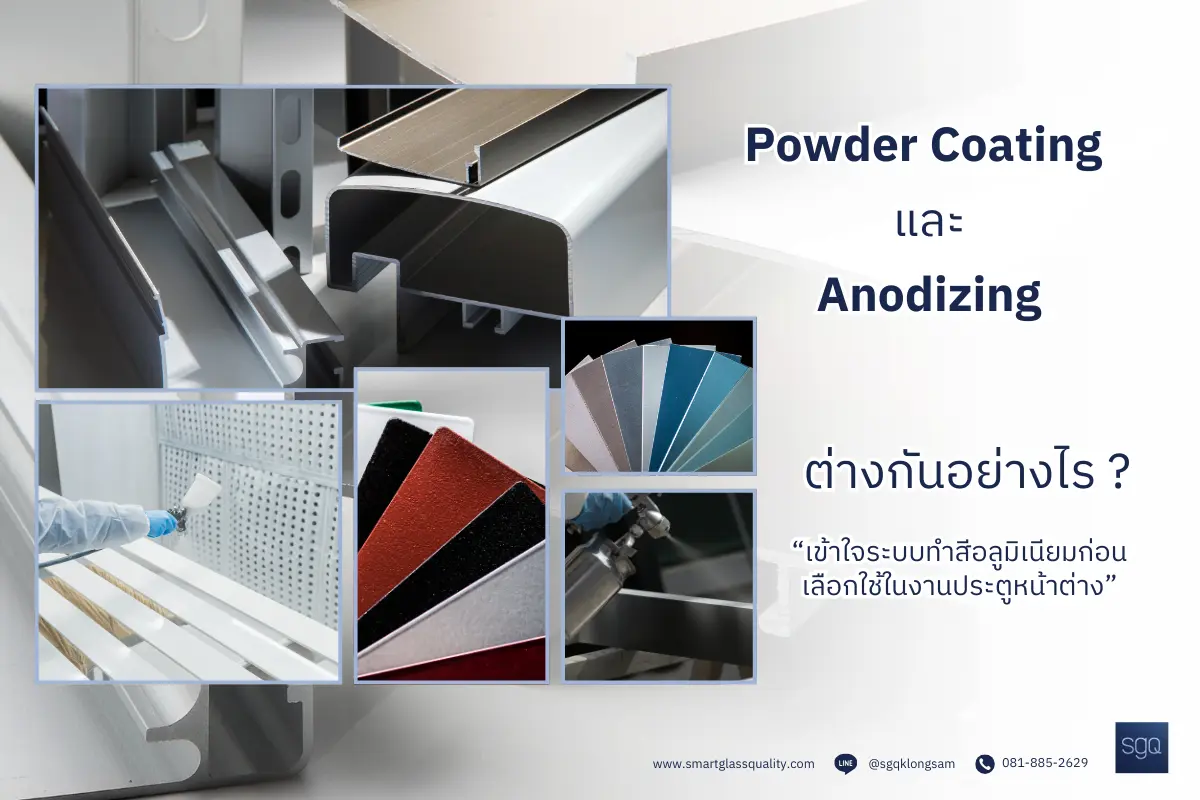
When it comes to finishing aluminum for doors and windows, two methods come up most often among contractors and tradespeople: Powder Coating and Anodizing. Both methods enhance the appearance and durability of aluminum profiles, but they differ significantly in process, surface texture, and suitability for different applications. This guide was put together by the SGQ Khlong Sam team, drawing on hands-on experience across multiple real projects to help you choose the right aluminum finishing system from the start.
🔍 Not sure whether your project needs Powder Coating or Anodizing?
The SGQ Khlong Sam team offers free consultations with real sample pieces available in-store for side-by-side comparison.
📞 081-885-2629 |
💬 Line: @sgqklongsam
How Do Powder Coating and Anodizing Differ in Their Production Process?
Aluminum is one of the most widely used materials in construction — especially for doors, windows, and glass frames — valued for being lightweight, rust-resistant, and structurally strong. However, to improve weather resistance and enhance the surface appearance of aluminum profiles, a finishing process is an essential step. Explore trending color options for aluminum doors and windows
There are various aluminum finishing methods, but the two most common and widely applied in architecture and large-scale projects are: Powder Coating and Anodizing.
Both processes share the same goal: enhancing aesthetics and protecting aluminum from corrosion. However, they differ in production methods, surface appearance, coating thickness, and resistance to environmental conditions.
- Powder Coating is the process of spraying colored powder onto the aluminum surface, then curing it with heat so the powder melts and fuses into a smooth, durable layer. It offers a wide variety of finishes—matte, glossy, or textured—making it suitable for projects that require specific colors or diverse design options.
- In contrast, Anodizing is an electrochemical process that transforms the aluminum surface into a thin, highly durable oxide film. The resulting colors are translucent, giving a luxurious metallic appearance, while providing superior resistance to UV rays and corrosion compared to conventional powder coating.
The choice between Powder Coating and Anodizing therefore depends on the project’s purpose, design requirements, environmental conditions, and budget.
What Is Powder Coating and How Does It Work on Aluminum Surfaces?
Powder Coating — also known as สีพ่นอลูมิเนียม in Thai — is a finishing process that applies dry powder pigment onto an aluminum surface using electrostatic charge, then cures it in an oven to form a smooth, dense film.
When it comes to surface finishing that combines beauty with environmental durability, Powder Coating is one of today’s most popular technologies—especially for aluminum doors, windows, and structural applications.
Aluminum Powder Coating is a finishing process in which dry powder pigment is electrostatically sprayed onto an aluminum surface, causing the powder to bond firmly to the metal. The coated piece is then placed in an oven at approximately 180–200°C, where the powder melts and forms a smooth, well-bonded, and durable coating film. Powder Coating differs from conventional water-based spray painting in that it uses dry powder with no liquid solvents involved.
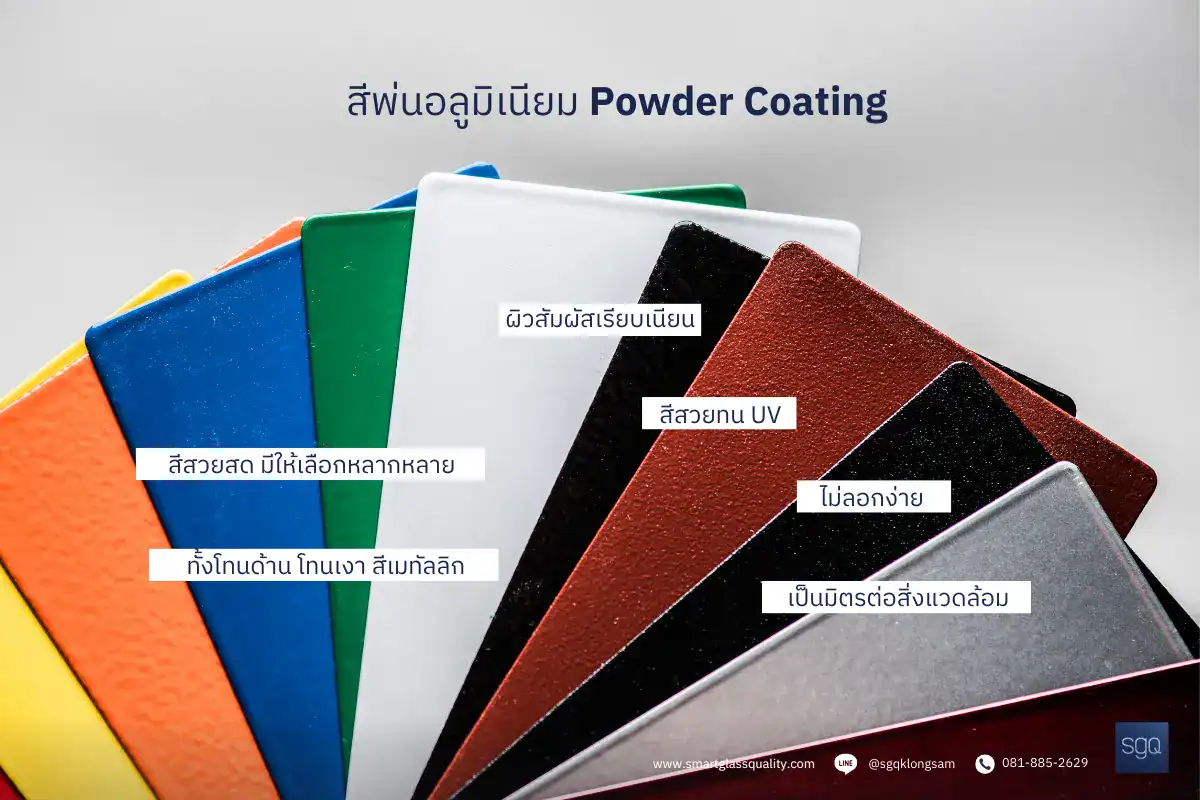
What Are the Key Properties of Aluminum Powder Coating?
- Vibrant color options available in matte, gloss, or even metallic finishes.
- Thick, smooth surface that provides excellent scratch resistance.
- Resistant to UV rays and weather conditions—won’t peel or fade easily when used outdoors.
- Environmentally friendly, as it does not require solvents like conventional painting systems.
Which Project Types Is Powder Coated Aluminum Best Suited For?
Powder-coated aluminum is widely used in a variety of applications, such as:
- Sliding and swing door frames
- Aluminum windows
- Fences, balconies, and railings
- Aluminum structures that require both durability and unique design finishes
With a perfect combination of beauty, durability, and a wide variety of color shades, Powder Coating has become one of the most popular choices for modern home design—ideal for those who want materials that are both “stylish and long-lasting.”
What Is Anodizing and How Does It Differ from Powder Coating?
Anodizing — known among Thai tradespeople as “สีโนไตซ์” — is an electrochemical process that converts the aluminum surface into a permanent oxide film. ไUnlike Powder Coating, it is not an external coating applied to the surface it is a structural transformation that hardens the surface from within, making it resistant to peeling even after years of use. In other words, Anodizing does not coat the aluminum — it permanently transforms the surface into an oxide film that is fully integrated with the base material itself.
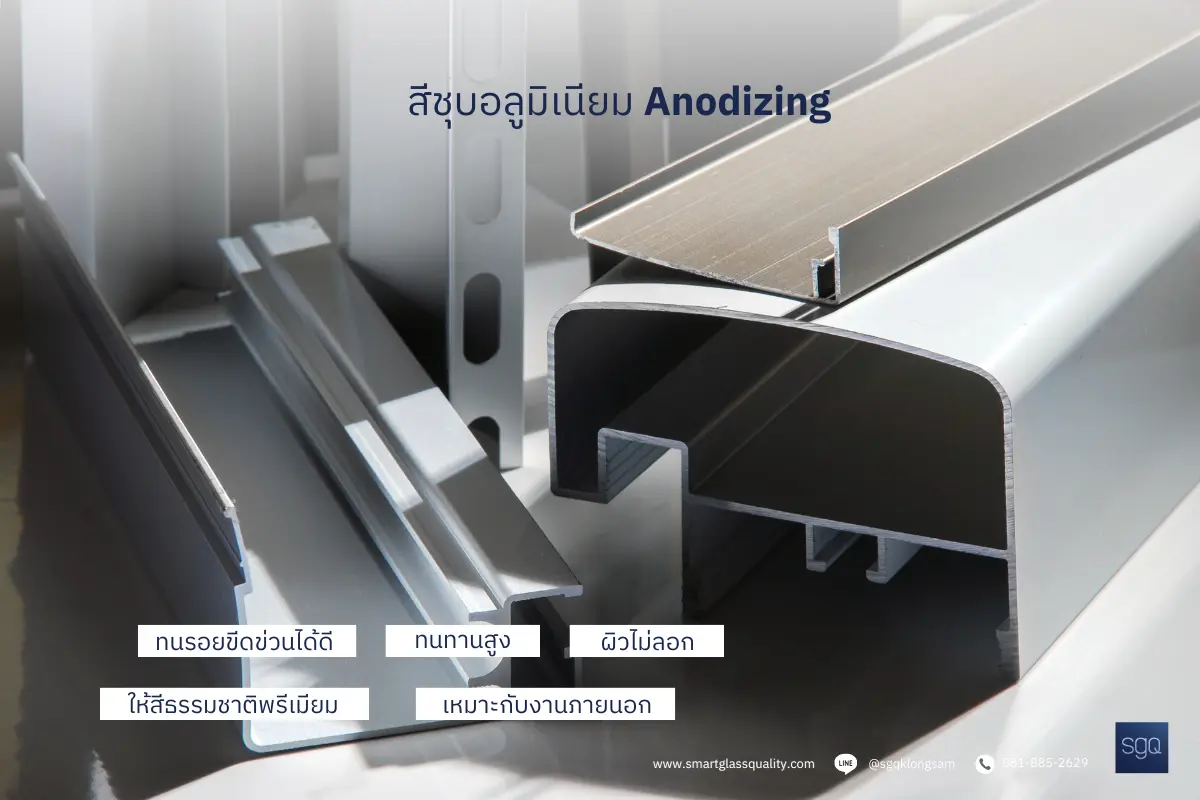
In the Aluminum Anodizing process, aluminum pieces are immersed in a special electrolyte solution and then exposed to an electrical current, causing an electrolytic reaction that creates a thin oxide layer. This layer can be dyed in various colors. The colors produced by Anodizing are translucent, giving a luxurious metallic appearance, and they resist fading much better than conventional painted finishes.
What Can Anodizing Do That Powder Coating Cannot?
- The surface is smooth, non-peeling, and non-flaking because Anodizing transforms the surface structure rather than simply coating it.
- Excellent resistance to corrosion and UV rays, making it ideal for outdoor applications.
- Naturally elegant colors that deliver a premium look, such as bronze, black, silver-grey, gold, and more.
- Easy to maintain, resistant to stains and dirt.
Which Project Types Is Anodized Aluminum Best Suited For?
Anodized aluminum finishing is best suited for projects requiring high durability and exposure to harsh environments, such as:
- High-rise building structures
- Exterior aluminum applications
- Window frames frequently exposed to sun and rain
- Aluminum profiles requiring long service life and a premium appearance
Although Anodizing has a higher cost compared to Powder Coating, it offers stronger surface quality, long-lasting resistance to sun and rain, and does not fade or peel. This makes it the ideal choice for projects that require a premium finish and long-term reliability.
Powder Coating vs Anodizing: How Do the Pros and Cons Compare?
Choosing an aluminum finishing method is not only about aesthetics—it also impacts durability and long-term performance. Both Powder Coating and Anodizing come with their own strengths, making them suitable for different applications. Below is a clear comparison of the pros and cons of each system.
- If you want a wide range of colors, cost efficiency, and the flexibility to change shades according to design → Choose Powder Coating.
- If you want maximum durability, easy maintenance, and suitability for exterior applications → Choose Anodizing.
Selecting the right finishing method ensures your aluminum work is both beautiful and long-lasting—whether for residential projects or large-scale developments.
How Do You Choose Between Powder Coating and Anodizing for Your Project?
Choosing the right finishing system comes down to three main factors: installation location, budget, and design requirements. There is no single correct answer but choosing the wrong type can lead to fading, peeling, or premature deterioration.
When deciding on aluminum for doors, windows, or glass frames, one critical factor that should not be overlooked is the finishing system. The finishing process greatly affects appearance, durability, and suitability for environmental conditions.
Although both Powder Coating and Anodizing are popular finishing methods, choosing the right type for the right application will significantly extend the service life of the aluminum and minimize long-term issues.
Why Is Powder Coating Better Suited for Interior Applications?
If you want aluminum with a wide variety of color options to match your home’s style or unique design—whether modern, loft, or minimalist—Powder Coating is the ideal choice. It allows you to select matte, glossy, or even special textured finishes.
Best suited for: interior doors and windows, decorative work requiring color-matched finishes with furniture, and clients who prioritize design flexibility and budget.
Why Is Anodizing Better Suited for Exterior Applications?
For projects exposed to sun, rain, wind, or high humidity—such as high-rise buildings, resorts, or vacation homes—Anodizing is the most reliable solution. It ensures superior durability, with no fading, peeling, or corrosion, outperforming conventional powder coating.
Best suited for: Exterior aluminum applications, profiles requiring long-term strength, and projects that emphasize premium quality and high-end image.
Beyond Budget, What Else Should You Consider Before Choosing a Finishing System?
Ultimately, the decision between Powder Coating and Anodizing should be considered alongside:
- The aluminum specifications required for the project (such as thickness and profile size)
- Budget Considerations
- Design and Durability Requirements
Making the right choice from the beginning will help you save on future maintenance costs and prevent issues such as fading or peeling surfaces.
🏪 Looking for Quality Powder Coated or Anodized Aluminum?
SGQ Khlong Sam stocks aluminum profiles in both finishing systems
ORM | Fuji Metal | Thai Metal | SMS Schimmer with samples available in-store for direct comparison.
Where Can You Buy Quality Powder Coated and Anodized Aluminum?
Whether you need aluminum for a residential home, commercial building, or large-scale project, SGQ Khlong Sam is ready to provide a complete solution. We supply high-quality aluminum profiles finished with standard processes—both Powder Coating and Anodizing.
We understand that great aluminum work is not only about aesthetics, but also about functionality, durability, and suitability for each environment. That’s why we carefully select only certified materials, offering a wide variety of colors, textures, and functional options.
Our services cover both small projects and large developments:
- Supply of ready-to-use finished aluminum profiles
- Consultation on the most suitable door and window systems
- Material sourcing and project-specific evaluation
- Professional Aluminum Door and Window Installation by Our Expert Team
SGQ Khlong Sam, Pathum Thani – Ready to Advise You
If you’re still unsure which aluminum finishing method best suits your project, visit SGQ Khlong Sam or give us a call to view real product samples. Our professional team is here to provide expert consultation and recommend the right materials that meet both your design and long-term performance needs.
Content
📖 Related Articles
The Complete Guide to Aluminum Powder Coating
A deep dive into the Powder Coating process from surface preparation and curing temperature to color selection and long-term maintenance.
Can Anodizing Be Repaired? Limitations and UV Effects You Need to Know
Why anodized aluminum is difficult to repair — and how UV exposure affects the surface over the long term.
Aluminum Color Trends: Which Tones Make Your Home Look Modern and Stylish?
A curated collection of popular aluminum colors, with tips on choosing the right frame tone to complement every home style.
📋 Powder Coating vs Anodizing Quick Summary
- Powder Coating — an external surface coating available in a wide range of colors at an affordable price point; ideal for interior applications and projects requiring specific color
- Anodizing (Anodizing (สีโนไตซ์) — an electrochemical surface transformation that does not peel or flake; offers superior UV and corrosion resistance; best suited for exterior applications.
- Repairs — Powder Coating can be spot-repaired by respraying; Anodizing requires the entire piece to be reprocessed.
- Price — Powder Coating is more affordable; Anodizing costs more but delivers a higher-quality surface finish.
- Bottom line — Interior use + wide color range = Powder Coating / Exterior use + maximum durability = Anodizin
Frequently Asked Questions: Powder Coating and Anodizing
1. What is Anodizing and how does it differ from Powder Coating?
Anodizing is the term commonly used by Thai tradespeople to refer to Anodizing — an electrochemical process that converts the aluminum surface into a permanent oxide film. Unlike Powder Coating, which applies a color coating over the exterior surface, an anodized finish does not peel or flake. However, it offers fewer color options and comes at a higher price point.
2. What is anodized aluminum and what applications is it used for?
Anodized aluminum is aluminum that has undergone the Anodizing process, resulting in a surface that is harder, more corrosion-resistant, and more UV-resistant than standard aluminum. It is widely used in high-rise building structures, exterior window frames, resort projects, and any application requiring a premium finish with a long service life.
3. Which lasts longer — Powder Coated or Anodized aluminum?
Anodizing offers superior durability in terms of corrosion and UV resistance, as the oxide film is fully integrated into the aluminum and cannot peel or flake. However, when it comes to scratch and impact resistance, Powder Coating — with its thicker film — also performs well. The better choice ultimately depends on the intended environment and application.
4. Can Powder Coated aluminum be repaired when scratched or damaged?
Yes, it can be repaired however, spot respraying may result in a slight color mismatch, as freshly cured paint can vary slightly in tone from the original. The best approach is a touch-up using factory-matched spray paint from the original manufacturer. For Anodizing, deep scratches or damage typically require the entire piece to be reprocessed.
5. Is there a significant price difference between Powder Coating and Anodizing?
Anodizing generally costs around 20–40% more than Powder Coating, depending on the oxide layer thickness and color selected. That said, Anodizing offers a longer service life and lower maintenance costs, making it a more cost-effective choice in the long run for applications that demand high durability.
About the Author
This article was written by the SGQ Khlong Sam team aluminum profile specialists supplying both Powder Coating and Anodizing finishing systems, with hands-on experience across multiple residential and commercial projects.
📍 Location: 19/60-61 Moo 7, Khlong Sam, Pathum Thani | 📞 Phone: 081-885-2629 | 🕐 Open: Monday–Saturday, 08:00–17:30
🏪 Buy Quality Powder Coated and Anodized Aluminum at SGQ Khlong Sam
Real sample pieces available in-store for side-by-side comparison
Free hardware removal service | Delivery available | Expert team ready to advise
📍 19/60-61 Moo 7, Khlong Sam, Pathum Thani | Open Monday–Saturday, 08:00–17:30
For Aluminium Contractors & Installers
If you need aluminium profiles, quality glass, premium hardware, custom cutting & fabrication, installation tools, or on-site technical advice,
you can contact us at:
• Line : https://lin.ee/Wkn1Ong
• Tel : 081-885-2629
• Facebook : Smartglassquality
For Homeowners & Project Owners
If you are looking for aluminium door–window installation, glass works, sliding and swing systems, room partitions, or high-quality materials for home renovation
you can contact us at:
• Line : https://lin.ee/Wkn1Ong
• Tel : 099-392-1963 , 097-936-1449