News&Knowledge from SgQ
How Thick Should TIS-Standard Aluminum Be to Be Considered High Quality?
The standard aluminum thickness for door and window projects in Thailand is 1.2–2.0 mm. TIS 284-2560 specifies the required thickness and weight per meter for extruded aluminum profiles. Technicians who choose aluminum that meets the standard will achieve stronger work that resists warping and clearly lasts longer than non-TIS aluminum.
✍️ Written by: SGQ Team (SmartGlassQuality Khlong Sam)
📅 Last updated: October 24, 2025
- What Thickness Does the TIS Standard Specify for Aluminium?
- Common Problems Caused by Non-Standard Aluminium Profiles
- How Each TIS Number Relates to Aluminium Thickness
- Standard Aluminium Window Sizes and the Right Thickness to Use
- How to Check Aluminium Thickness Before Installation
- Where to Buy TIS-Standard Aluminium at SGQ Khlong Sam
- Summary: How Thick Should TIS-Standard Aluminium Be?
- Frequently Asked Questions (FAQ)
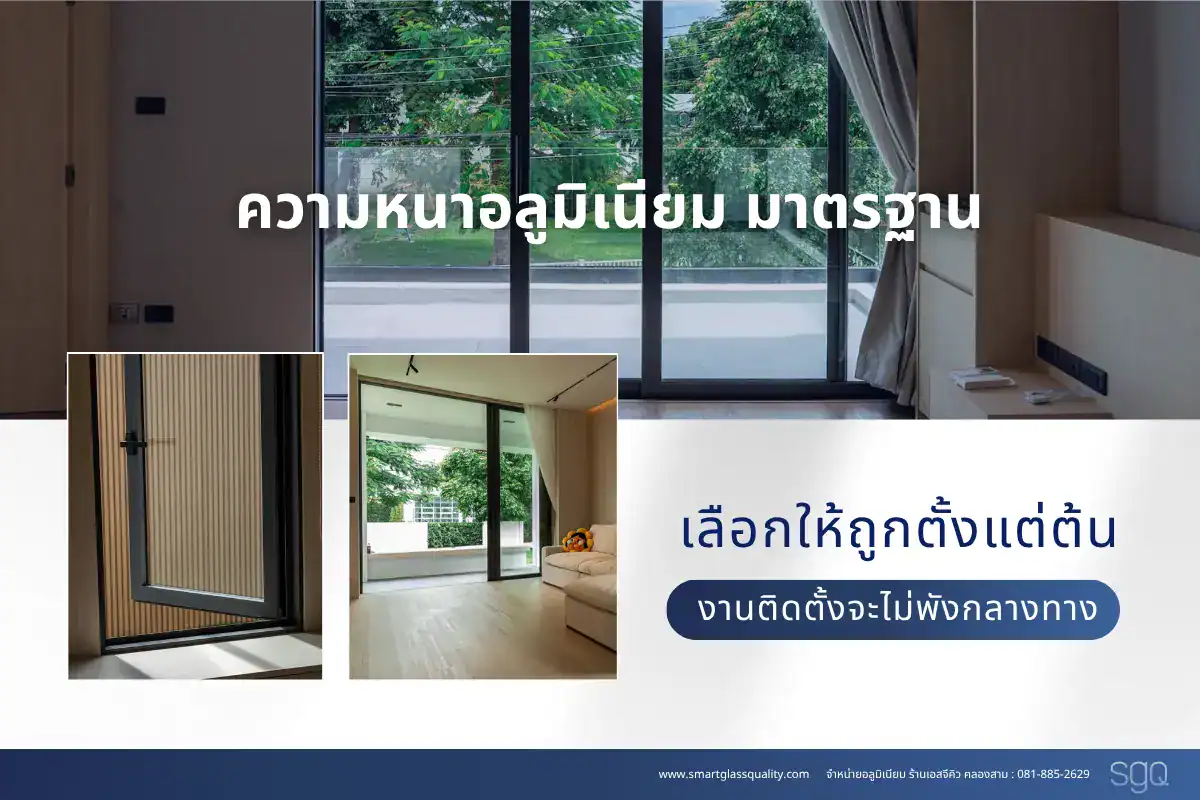
When talking about standard aluminum thickness, many people are familiar with numbers such as 1.2, 1.5, 1.8, and 2.0 mm, but they may not know where these numbers come from or why choosing the wrong thickness can affect the entire project. This article is different from general guides that recommend thickness by application type. Here, we will take a closer look at the TIS standard: what it specifies, how it is measured, and how non-standard aluminum affects real job sites. For more information on choosing the right thickness for each panel type, you can read the article “Recommended Aluminum Thickness for Door and Window Projects.”
What Aluminum Thickness Does the TIS Standard Specify?
TIS 284-2560 specifies that extruded aluminum profiles must have wall thickness and weight per meter that match the specifications submitted for certification. For door and window projects in Thailand, the commonly used thickness range is 1.2–2.0 mm, with each thickness suitable for different loads and panel sizes.
- 1.2 mm: Light-duty work, such as small windows or interior sliding panels.
- 1.5 mm: General work most commonly chosen by technicians, such as sliding doors and awning windows.
- 1.8–2.0 mm: Heavy-duty work that needs to support greater force and weight, such as frameless-style panels, full-glass panels, and exterior doors. Each type of glass has a different weight. Read more in “Processed Glass vs. Standard Glass” to choose the correct frame thickness.
Professional technicians usually choose aluminum thickness based on panel size and installation location, not by price alone.
🔍 Not sure whether the aluminum you are using meets TIS standards?
The SGQ Khlong Sam team can help check and recommend the right aluminum specifications for free.
📞 081-885-2629 |
💬 Line: @sgqklongsam
What Problems Can Non-Standard Aluminum Thickness Cause?
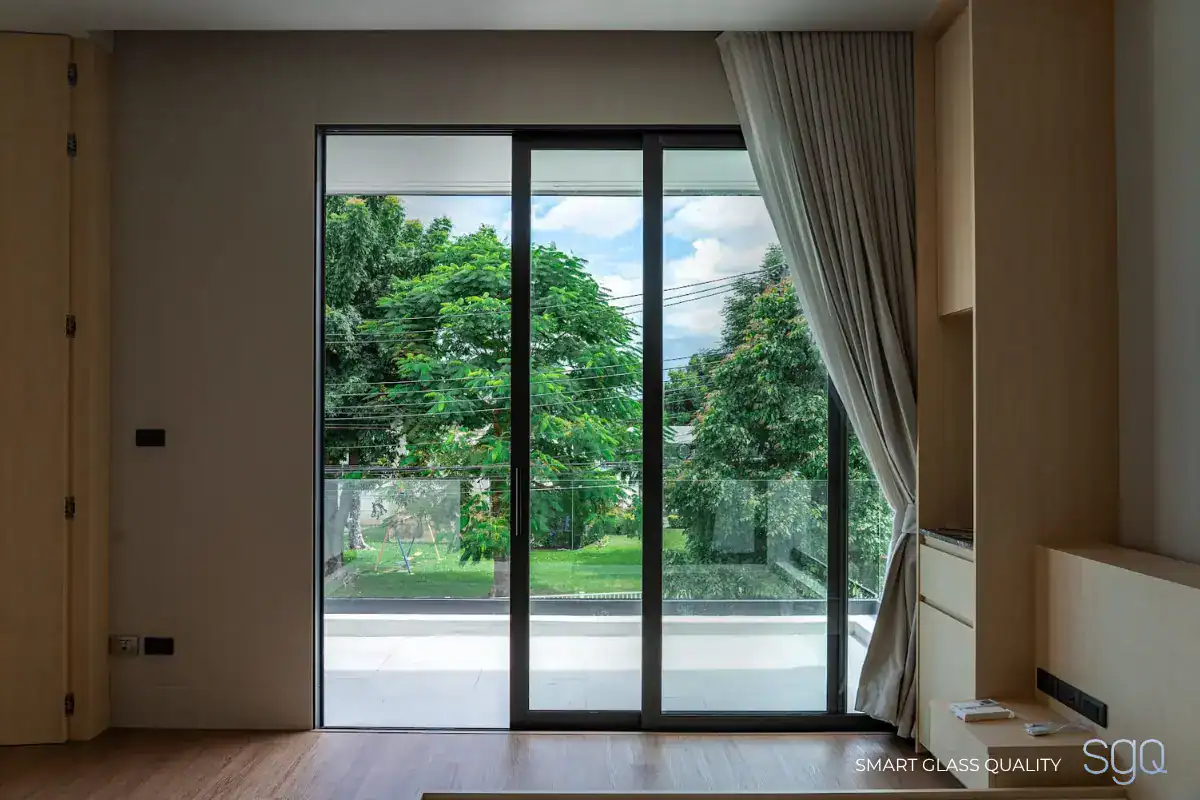
Aluminum with thickness that does not match the specification or does not meet TIS standards often shows clear problems within 1–3 years after installation, such as shaking panels, bent frames, and issues that are difficult and more expensive to repair than choosing the right materials from the start.
- Too thin: shaking panels, wind noise, and bent frames after long-term use.
- Too thick: unnecessary budget waste and heavier panels that cause hardware to wear out faster.
- Non-TIS standard: peeling color, uneven surface, and weight that does not match the specification.
However, aluminum that is thicker than the project requires is not always the best solution, because heavier panels can cause hardware to wear out faster than normal.
🏪 Looking for TIS-Standard Aluminium from Leading Brands?
SGQ Khlong Sam offers ORM, Fuji Metal, Thai Metal, and SMS Schimmer with clear specifications and certification documents.
Get free consultation before ordering — no extra cost.
How Is Each TIS Number Related to Aluminum Thickness?
Each TIS number controls a different aspect of aluminum quality. Understanding what each standard covers helps you choose and inspect materials more accurately.
- TIS 284-2560: Extruded aluminum → Checks the correct thickness and weight. Aluminum profiles that meet this standard have strength and durability according to specification. Read more in “Strong and Durable Aluminum Profiles.”
- TIS 218-2520: Anodized aluminum → Controls coating quality.
- TIS 744-2563: Finished aluminum door and window systems → Tests wind pressure resistance, water resistance, and overall strength.
If an aluminum profile does not have “TIS,” it may mean the thickness does not match the specification or the material quality is not up to standard.
Standard Thickness Suitable for Each Type of Work
Standard Aluminum Window Sizes and the Required Thickness
Standard aluminum window openings in Thailand are usually 60×110, 80×110, and 100×110 cm. The opening width and glass weight determine how thick the aluminum frame should be. For projects using European aluminum profile systems, which have different thickness specifications from Thai systems, always check the specification table of that specific system first.
How Thick Should Standard-Sized Sliding Aluminum Windows Be?
For general sliding aluminum windows with openings up to 100 cm wide, aluminum frames with a thickness of 1.2–1.5 mm can be used safely. However, if the aluminum window frame needs to support heavier glass or an opening wider than 120 cm, the thickness should be increased to 1.5–1.8 mm to prevent long-term frame warping.
How Thick Should an Aluminum Window Frame Be to Meet the Standard?
An aluminum window frame that meets TIS 284-2560 must have a profile wall thickness that is not lower than the specification stated for each profile. A basic way to check is to use a vernier caliper to measure the thinnest wall section of the aluminum profile. If the measured value is 0.1 mm or more below the specification, it is considered non-standard.
How to Check Whether the Aluminum You Bought Has the Correct Standard Thickness
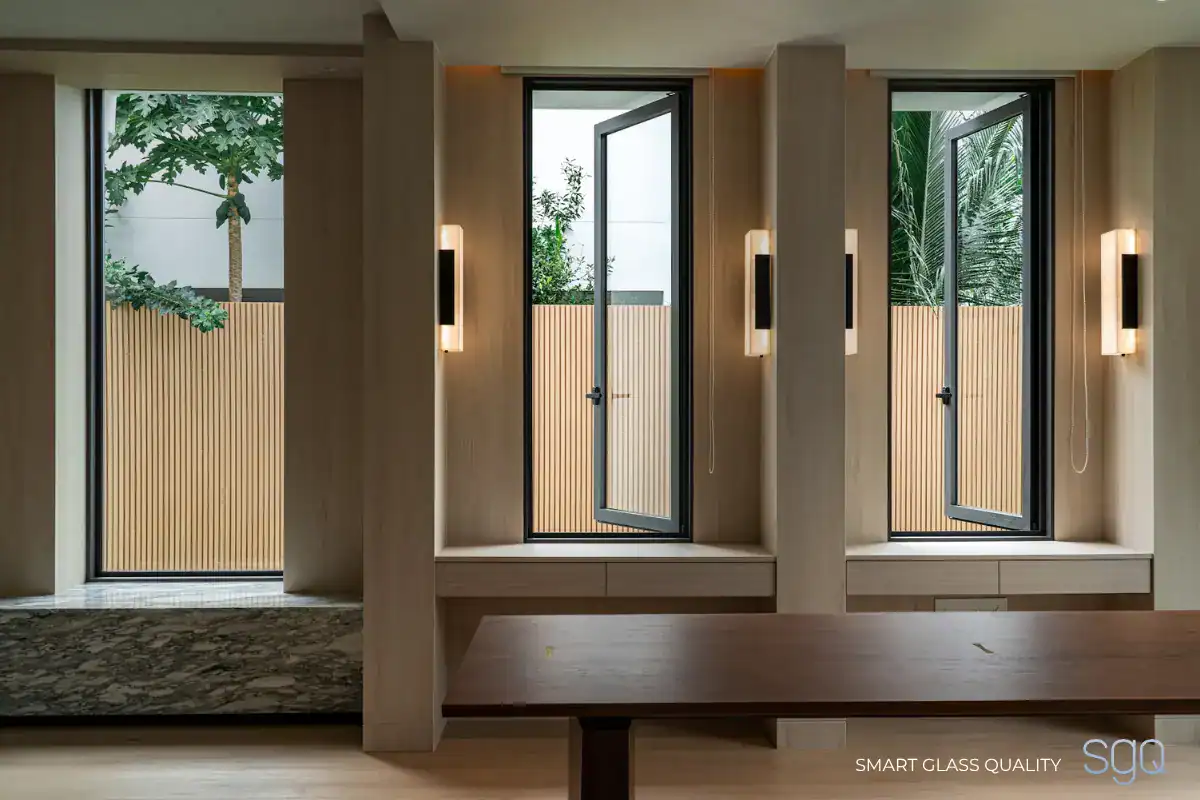
Aluminum thickness can be checked both visually and with measuring tools. Professional technicians usually check both ways before accepting materials for the job site.
- Check the panel size: Larger panels require greater thickness.
- Check the installation location: Interior use can be thinner / exterior use requires thicker aluminum.
- Ask for TIS certification: To ensure the aluminum truly meets the standard thickness.
- Choose a trusted brand: Such as ORM, Fuji Metal, and Schimmer, which provide clear specifications.
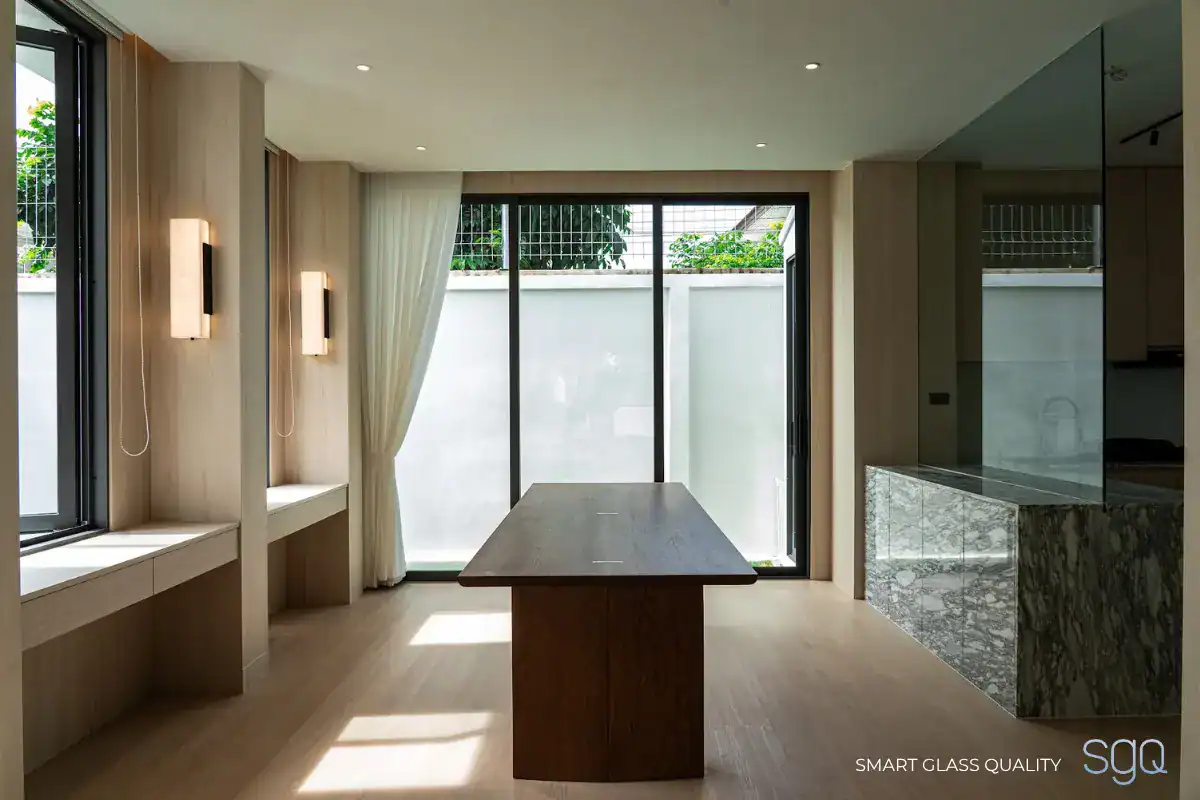
Buy TIS-Standard Aluminum at SGQ Khlong Sam
Standard aluminum thickness is not a fixed number. It should be selected based on the type of work, panel size, and environment, with the commonly used standard range being 1.2–2.0 mm.
Choosing the right thickness from the start means stronger installation, fewer repair issues, and longer service life.
Looking for TIS-standard aluminum from all major brands? Visit SGQ Khlong Sam. Complete one-stop solutions — aluminum profiles, glass, and technician hardware. If you need our technician team to assist from material selection to installation, see more details at SGQ Door and Window Installation Services.
📖 Related Articles
What Should You Consider When Choosing Aluminium Thickness for Doors and Windows?
Choose the right thickness based on the opening type, installation environment, and brand that fits your budget.
How to Choose Strong and Durable Aluminium Profiles for Long-Term Value
Profile strength does not depend on thickness alone — material grade and production quality are just as important.
How Are European Aluminium Profiles Different from Thai Systems?
Different profile systems come with different thickness specifications and testing standards.
Processed Glass vs Regular Glass: Which One Fits Aluminium Frames Best?
Heavier glass requires thicker and stronger aluminium frames — know the right specification before ordering materials.
📋 Standard Aluminum Thickness: A Quick Summary
- Applicable standard: TIS 284-2560 controls the wall thickness and weight per meter of extruded aluminum profiles.
- Common thicknesses: 1.2 / 1.5 / 1.8 / 2.0 mm — each thickness is suitable for different loads and panel sizes.
- Most commonly chosen by technicians: 1.5 mm for general work.
- How to check: Use a vernier caliper to measure the profile wall thickness and request TIS documents from the supplier.
- Buy from a store with clear specifications: Prevent problems from the start instead of fixing them later.
Frequently Asked Questions: Standard Aluminum Thickness
1. What Aluminum Thickness Does the TIS Standard Specify?
TIS 284-2560 does not specify one fixed thickness number. Instead, it requires the thickness and weight per meter to match the specifications submitted by the manufacturer for certification. In practice, the thickness commonly used for door and window projects in Thailand ranges from 1.2–2.0 mm, with 1.5 mm being the most popular choice for general work.
2. How Can You Measure Aluminum Thickness at a Basic Level?
Use a vernier caliper to measure the thinnest wall section of the profile. The measured value should match the specification stated in the TIS document or factory certificate. If the value is more than 0.1 mm below the specification, it is considered non-standard, and that material lot should be rejected.
3. How Are Standard Aluminum Window Sizes Related to Thickness?
The opening size and glass weight determine the required frame thickness. For sliding windows with openings up to 100 cm wide, 1.2–1.5 mm aluminum can be used. However, if the opening is wider than 120 cm or heavier glass is used, the thickness should be increased to 1.5–1.8 mm to prevent frame warping.
4. How Is Non-TIS Aluminum Different from TIS-Certified Aluminum in Practice?
Non-TIS aluminum may have uneven thickness throughout the profile, thin surface coating, color that peels easily, and weight per meter that does not match the specification. This affects both strength and service life. For project work or high-rise buildings, TIS documents are required by construction inspectors every time.
5. Where Can You Buy TIS-Standard Aluminum with Certification Documents?
SGQ Khlong Sam sells TIS-standard aluminum from several brands, including ORM, Fuji Metal, Thai Metal, and SMS Schimmer. The store provides clear specifications and a team ready to advise on choosing the right thickness for each type of work. For inquiries, call 081-885-2629.
About the Author
This article was written by the SGQ Khlong Sam technician team. A supplier of TIS-standard aluminum profiles and aluminum door and window installation services. The information in this article is based on real experience from receiving and inspecting materials at job sites every day.
📍 Location: 19/60-61 Moo 7, Khlong Sam, Pathum Thani | 📞 Phone: 081-885-2629 | 🕐 Open: Monday–Saturday, 08:00–17:30
🏪 Buy TIS-Standard Aluminium from Leading Brands at SGQ Khlong Sam
ORM | Fuji Metal | Thai Metal | SMS Schimmer
Clear specifications, certification documents, and free consultation from our expert team
📍 19/60-61 Moo 7, Khlong Sam, Pathum Thani | Open Monday–Saturday, 08:00–17:30
For Aluminium Contractors & Installers
If you need aluminium profiles, quality glass, premium hardware, custom cutting & fabrication, installation tools, or on-site technical advice,
you can contact us at:
• Line : https://lin.ee/Wkn1Ong
• Tel : 081-885-2629
• Facebook : Smartglassquality
For Homeowners & Project Owners
If you are looking for aluminium door–window installation, glass works, sliding and swing systems, room partitions, or high-quality materials for home renovation
you can contact us at:
• Line : https://lin.ee/Wkn1Ong
• Tel : 099-392-1963 , 097-936-1449