News&Knowledge from SgQ
Processed Glass vs. Standard Glass: How Aluminum Installers Should Advise Customers for Safety and Budget
Processed glass is glass that has undergone processes to increase strength and safety. It is mainly divided into 2 types commonly used by technicians: tempered glass, which breaks into small pieces that are less dangerous, and laminated glass, which stays attached to the film after breaking and does not fall apart. This is different from regular glass, which breaks into sharp, blade-like shards. Technicians should recommend processed glass for risk-prone areas such as sliding doors, bathrooms, and areas with children to reduce risks and avoid repeated repair work.
✍️ Written by: SGQ Team (SmartGlassQuality Khlong Sam)
📅 Last updated: January 27, 2026
- Why Is Choosing the Right Glass Important?
- Standard Glass vs Processed Glass: What’s the Difference?
- A Closer Look at Each Type of Safety Glass
- How Should Technicians Recommend the Right Glass to Customers?
- SGQ Is Ready to Help You Choose the Right Glass
- Summary: Processed Glass vs Standard Glass
- Frequently Asked Questions (FAQ)
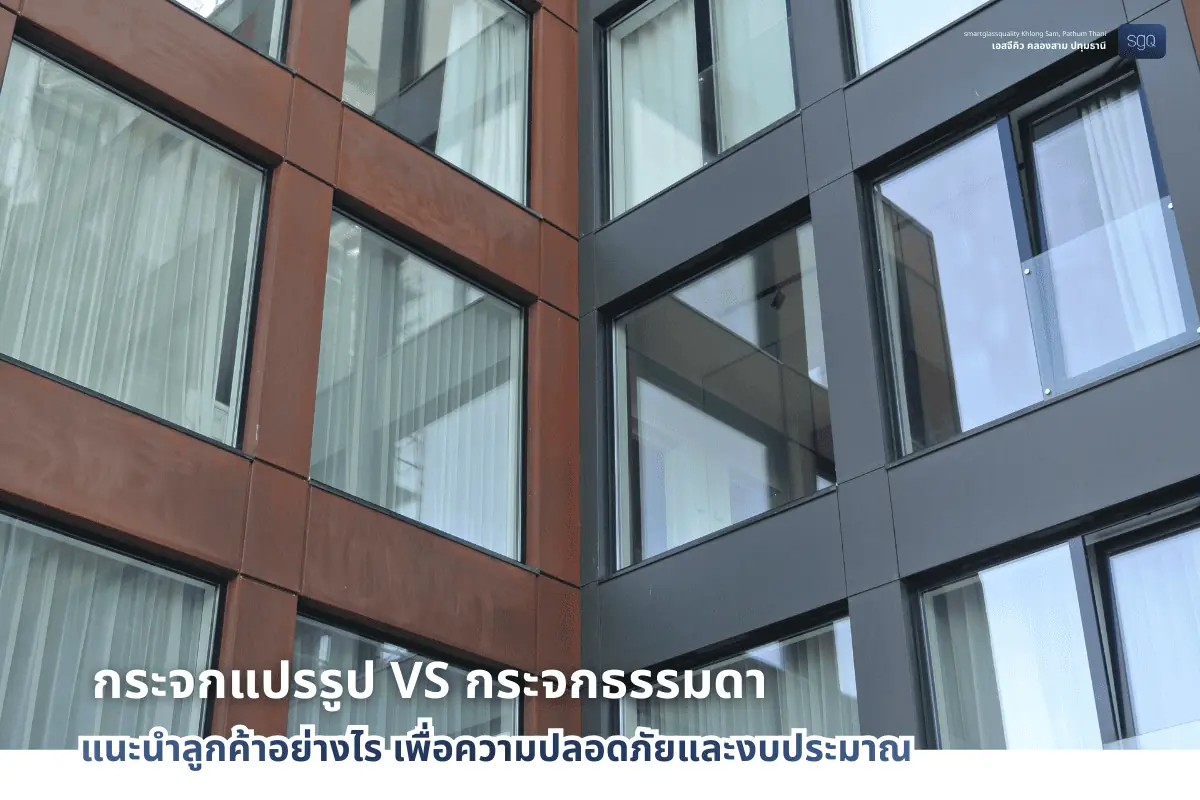
When our technicians visit a site to inspect doors and windows, customers often ask the classic question:Which type of glass should we use? Is standard glass sufficient, or should we upgrade to safety glass?”
To be honest, choosing the wrong type of glass doesn’t just compromise home safety—it often forces installers to return and fix the job again, wasting money, time, and customer trust.
Today, SGQ Khlong Sam shares professional yet easy-to-understand insights, helping fellow installers confidently explain glass options to customers—based on real cases commonly found in aluminum door and window installations.
This article will take a deep dive into:
- What standard glass is—its advantages and limitations
- The different types of processed (safety) glass and how each is used
- How installers should recommend glass options that match both the space and the customer’s budget
Which glass type is safest for each specific area of the home
🪟 Need processed glass for doors and windows?
SGQ Khlong Sam offers ready-to-sell tempered and laminated glass, with practical consultation from technician to technician.
📞 081-885-2629 |
💬 Line: @sgqklongsam
Why is choosing the right glass so important for door and window installation?
To be honest, glass is one element many homeowners tend to overlook, seeing it as just a transparent panel used to close an opening. However, in real-world installation work, installers know very well that not all glass is the same—and the differences directly affect:
- Safety
- Structural strength
- Sound insulation
- Long-term value and cost efficiency
This is especially true for processed glass, which refers to glass that has undergone strengthening processes—such as tempered glass and laminated glass—designed specifically to enhance installation safety.
The goal of this article is to help installers better advise customers on which type of glass should be used in each area of the home—so the job is completed properly, without the need for repeat repairs.
Standard Glass vs. Processed Glass: What’s the Difference?
What is annealed glass?
This is the most basic and widely used type of glass, produced by melting raw materials and allowing the glass to cool naturally. Its advantages include affordability, easy cutting, and simple edge polishing—but it also comes with important limitations…
- When broken, it shatters into sharp, blade-like fragments.
- Lower strength compared to processed glass.
- Not suitable for high-risk areas such as sliding doors, large panels, or spaces frequently used by children.
This is why the question “safety glass vs. standard glass” frequently arises during installation projects—most customers simply don’t realize how significant the differences truly are.
What is processed glass, and what types are available?
Processed glass is designed specifically to overcome the limitations of standard glass by enhancing both strength and safety.
There are two main types most commonly used by installers:
- Tempered Safety Glass
- Laminated Safety Glass
Both types are essential knowledge for installers, as they allow us to clearly explain which glass should be used in which areas—ensuring maximum safety and cost-effectiveness for the customer.
A Closer Look at Each Type of Safety Glass
How is tempered safety glass different from regular glass, and what applications is it suitable for?
Tempered glass is standard glass that has been heat-treated at very high temperatures and then rapidly cooled, resulting in significantly improved properties:
- Up to 4–5 times stronger than standard glass
- Excellent impact resistance
- Much higher heat resistance compared to standard glass
Breakage Pattern:
Shatters into small, blunt granules similar to “corn kernels,” rather than sharp shards—greatly reducing the risk of serious injury.
Suitable Applications:
- Aluminum Sliding Doors
- Shower enclosures and bathroom areas
- Windows exposed to strong wind pressure
- Areas prone to frequent impact
- Large panels that require high structural strength
Can laminated safety glass really help with sound reduction and burglary protection?
Laminated glass is composed of two glass sheets bonded together with a PVB or EVA interlayer in between.
The advantage is that when the glass breaks, it will still “adhere to the film layer.”
It does not fall, scatter, or cause danger to people inside the home.
Key Features
- Maximum safety performance
- Provides better sound insulation than tempered glass
- Blocks ultraviolet (UV) rays
- Difficult to break through, offering strong anti-burglary protection
Suitable Applications:
- Tall or high-rise windows
- Aluminum Glass Railing
- Areas exposed to road or traffic noise
- Showrooms or large open-plan spaces
- Sliding doors that require a high level of safety and security
Comparison Table: Three Types of Glass — Clear and Practical for Installers
💡 Simple summary for technicians:
If the customer wants “basic safety” → Tempered glass |
If they want “sound reduction / burglary protection / maximum safety” → Laminated glass |
If the budget is limited and it is not a high-risk area → Regular glass can still be used
Simple Summary for Installers
-
If the customer wants basic safety → choose tempered glass.
-
If the priority is sound insulation, burglary resistance, and maximum safety → choose laminated glass.
-
If the budget is limited and the area is not high-risk → standard glass may still be acceptable.
🪟 Not sure which type of glass is right for this job? Consult SGQ anytime
Tell us the usage area, panel size, and budget.
The SGQ team will help recommend the most suitable type of glass for free.
Advice from aluminum technicians: how to recommend the most suitable glass for aluminum doors to customers
Always prioritize safety first when recommending glass types.
When surveying a home, installers should identify potential risk areas such as:
- Sliding doors with high impact risk → tempered glass is recommended.
- Tall windows or balcony railings → laminated glass is recommended.
- Homes with children → avoid using standard glass.
How to Explain Budget Considerations Clearly to Customers
Many installers worry that customers won’t accept safety glass because of the higher price—but in reality, when explained this way, most customers understand immediately:
- “Budget” option: use annealed glass in low-risk areas, such as high fixed panels that are not exposed to impact.
- “Value-for-money” option: use tempered glass in areas customers use regularly, such as sliding doors and walkway windows.
-
“Premium” option: use laminated glass for sound reduction, burglary protection, and higher safety.
Which Glass Type Should Installers Choose for Each Situation?

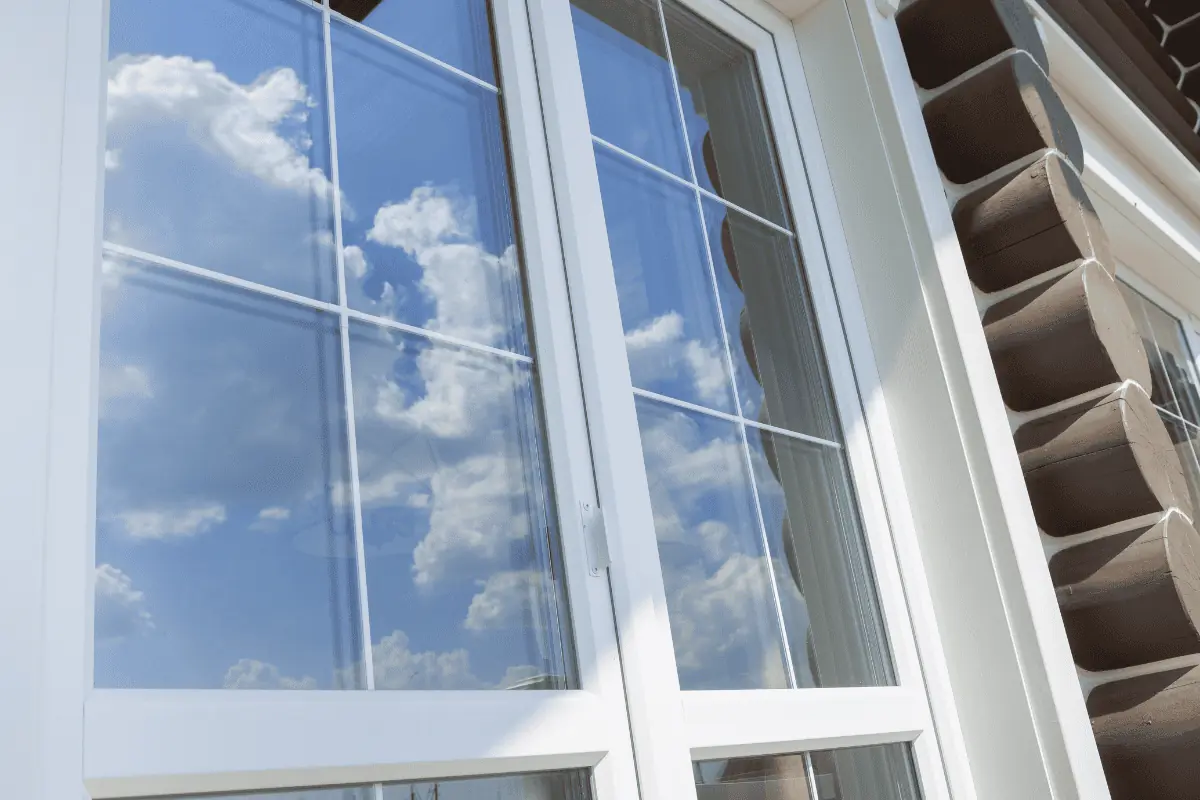
SGQ Khlong Sam is ready to help you choose the right glass, so technicians can complete the job faster and meet the required standards.
At SGQ Khlong Sam, we’ve seen many installers face challenges when selecting the right type of glass for different projects. That’s why we want to share real on-site experience—so fellow installers can deliver the best possible results. If you need advice on glass types, thickness, or selecting processed glass that matches specific door and window systems, our team is happy to support you—installer to installer. No hard selling, no pushing products—just practical guidance to help your job finish faster and meet professional standards.
If you have a project drawing with the usage areas specified, you can always send it to us for review. SGQ Khlong Sam is happy to assist you.
📖 Related Articles
Types of Glass in Aluminum Work: All Types That Technicians Should Know
Expand your glass knowledge in depth, covering every type commonly used in real projects
What Is Low-E Glass? Can It Really Help Reduce Heat Entering the Home?
Another type of processed glass that customers often ask about — knowing it helps you recommend the right option to customers
Summary: Processed Glass vs. Float Glass — How Should Technicians Recommend Them to Customers?
- Float Glass — affordable, but breaks into sharp pieces, making it unsuitable for high-risk areas
- Tempered Glass — 4–5 times stronger, breaks into small pieces for better safety, suitable for sliding doors, bathrooms, and impact-prone areas
- Laminated Glass — offers the highest safety; when broken, the glass stays bonded and does not fall apart. It also helps reduce noise and improve anti-theft protection, making it suitable for glass railings, high windows, and premium areas
- Customer Recommendation Principle — check high-risk areas first, then consider the budget. Do not lower the specifications in areas that affect safety.
- Get advice from SGQ Khlong Sam — we offer all types of glass and provide recommendations based on the actual installation area and budget.
Frequently Asked Questions: Processed Glass VS Regular Glass
1. What is processed glass, and how is it different from regular glass?
Processed glass is glass that has undergone processes to increase strength and safety, such as high-heat tempering or film lamination. Unlike regular glass, which breaks into dangerous sharp shards, processed glass is designed to break more safely.
2. Tempered Glass VS Regular Glass: What is the difference?
Tempered glass is 4–5 times stronger than regular glass. When it breaks, it shatters into small, corn-kernel-like pieces rather than dangerous sharp shards. In contrast, regular glass breaks into blade-like sharp fragments. It is suitable for sliding doors, bathrooms, and areas that are frequently exposed to impact.
3. Can laminated glass really reduce noise?
Yes. Laminated glass provides better sound reduction than tempered glass and regular glass because the PVB/EVA interlayer in the middle helps absorb vibrations and sound waves. It is suitable for homes along main roads, condos, and areas that need to reduce outside noise.
4. Should technicians recommend regular glass or safety glass for sliding doors?
We recommend tempered glass for sliding doors of all sizes, because sliding doors have a higher chance of impact. If regular glass breaks during use, it can be dangerous to users. Tempered glass breaks into small pieces, greatly reducing the risk of serious injury.
5. Can processed glass be ordered from SGQ Khlong Sam?
Yes. SGQ Khlong Sam offers all types of processed glass, including tempered glass and laminated glass. We are also ready to advise which type of glass is suitable for each area. Contact us at 081-885-2629 or LINE: @sgqklongsam.
About the Author
This article was written by the SGQ Khlong Sam team
A supplier of processed glass, tempered glass, laminated glass, and complete aluminum accessories
Based on real experience working with technicians and contractors across many projects in Pathum Thani and Bangkok
🪟 Need processed glass for your next project? SGQ has everything you need, with expert recommendations available
Tempered Glass | Laminated Glass | Clear Glass | Green Tinted Heat-Reducing Glass
Practical advice from technician to technician, with prices that work for professionals
📍 19/60-61 Moo 7, Khlong Sam, Pathum Thani | Open Monday–Saturday, 08:00–17:30
For Aluminium Contractors & Installers
If you need aluminium profiles, quality glass, premium hardware, custom cutting & fabrication, installation tools, or on-site technical advice,
you can contact us at:
• Line : https://lin.ee/Wkn1Ong
• Tel : 081-885-2629
• Facebook : Smartglassquality
For Homeowners & Project Owners
If you are looking for aluminium door–window installation, glass works, sliding and swing systems, room partitions, or high-quality materials for home renovation
you can contact us at:
• Line : https://lin.ee/Wkn1Ong
• Tel : 099-392-1963 , 097-936-1449