News&Knowledge from SgQ
Perfect Aluminum Door Installation: Tips from Professional Technicians | SGQ
Proper aluminum door installation starts with 3 main things: choosing a profile thickness of at least 1.2 mm, checking the level and squareness of the installation opening before starting, and installing the door frame only after the plaster is completely dry. When done correctly from the beginning, the door will open and close smoothly, will not warp, and will last longer without frequent repairs.
✍️ Written by: SGQ Team (SmartGlassQuality Khlong Sam)
📅 Last updated: March 13, 2025
- What Do You Need to Prepare Before Installation?
- What Is the Standard Aluminum Thickness for Doors?
- Installation Hardware Checklist
- Common Problems and How to Fix Them
- Correct Installation Steps
- Adjusting the Panel and Fixing Issues After Installation
- Buy Aluminum and Hardware at SGQ Khlong Sam
- Summary: How to Install an Aluminum Door Perfectly
- Frequently Asked Questions (FAQ)

Installing aluminum doors with quality is not just about tools. It also depends on understanding each step, from choosing the aluminum frame for the door panel and selecting the right thickness to adjusting the aluminum door panel to the correct level after installation. Technicians with experience across many projects know well that small mistakes at the beginning often become major problems later. The SGQ Khlong Sam team has gathered practical tips and real on-site installation steps to help your aluminum door and window installation work come out neat and precise from the first time.
🔧 Need a Complete Set of Aluminum Profiles and Door Installation Accessories?
SGQ Khlong Sam has ready-to-deliver stock, with technicians available to provide free consultation on choosing the right thickness and profile for your project.
📞 081-885-2629 |
💬 Line: @sgqklongsam
Aluminum Door Installation: Pro Tips for a Flawless Finish!
A home or residence has essential components that cannot be overlooked, and one of the most important is the front door. It serves as the first line of defense for safety, providing secure access for the residents, protecting against wild animals or intruders, and also reflecting the style and design of the house. It helps block wind, sunlight, and noise. Nowadays, the popular material for making front doors is aluminum profiles, or aluminum doors.
Therefore, proper and standard aluminum door installation is something every aluminum specialist must know to ensure quality and long-lasting performance. In this article, SgQ has gathered expert tips for installing aluminum doors efficiently, ensuring durability and long-term usability.
What Should You Prepare Before Installing an Aluminum Door?
Good preparation covers 2 main parts: choosing the right materials according to the project specifications and checking that all tools are complete before going to the worksite. Technicians who are well prepared in both areas can work faster, reduce rework, and achieve a more professional result.
Choosing High-Quality Aluminum Profiles Suitable for the Job
-
Selecting the Right Aluminum Profile Thickness for Strength and Durability
For optimal strength and longevity, the aluminum profile should have a thickness of at least 1.2 – 2.0 mm. -
Aluminum Profile Quality: Choosing the Right Grade for Construction
Select an aluminum grade that is suitable for construction and resistant to corrosion. For doors and windows, grade 6063-T5 or higher is recommended for optimal durability and performance. -
Standard Surface Coating for Aluminum to Prevent Corrosion
Choose anodized or powder-coated finishes for better corrosion resistance. The coating thickness should be no less than 25 microns to ensure durability and long-lasting protection. -
Durable Track and Roller System for Smooth and Strong Performance
Opt for a sturdy track and high-quality rollers that can support heavy loads while ensuring smooth and effortless movement.
Always Check Essential Installation Tools Before Heading to the Job Site
Proper Tool Preparation Ensures a Smooth, Efficient, and Professional Aluminum Door Installation
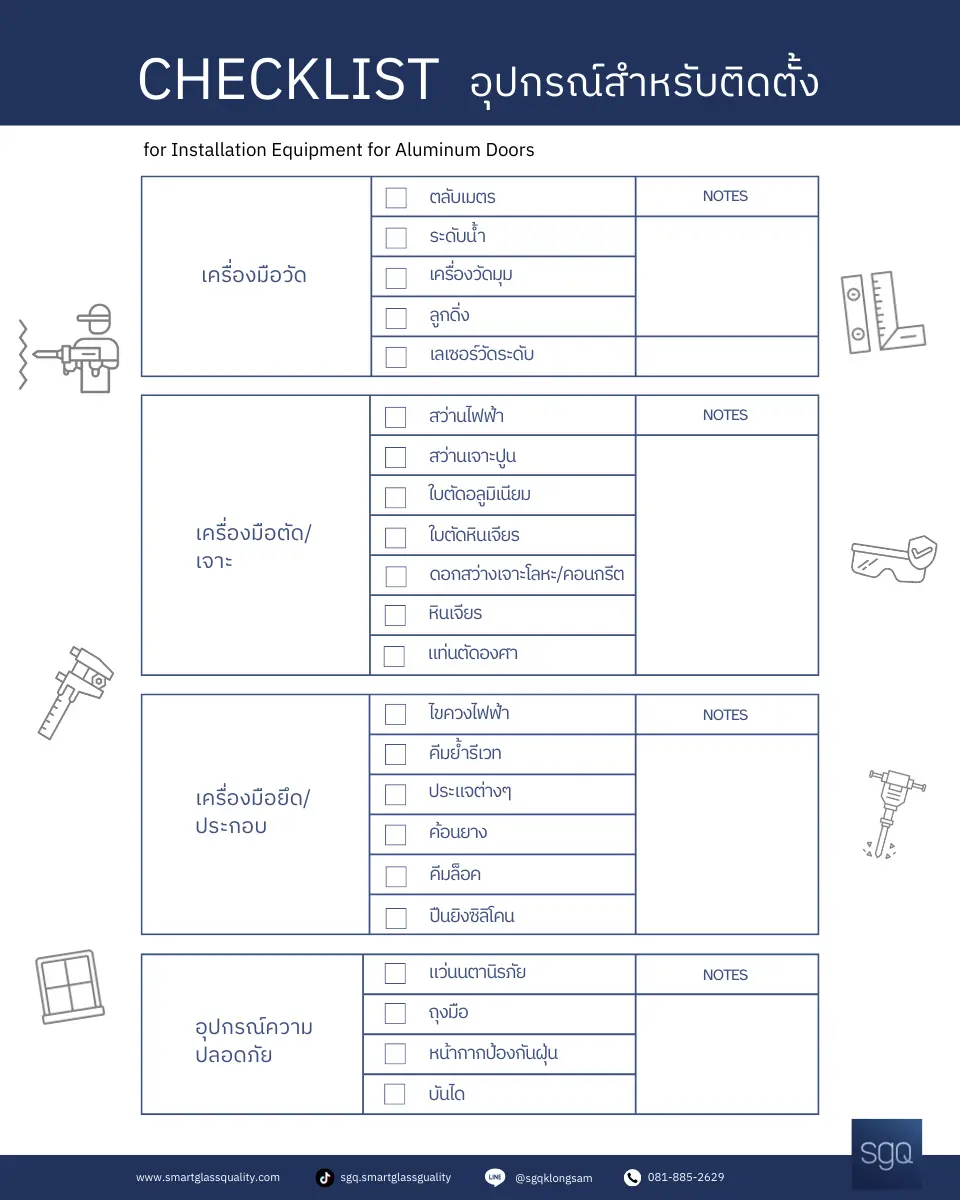
Having the right tools ready enhances installation efficiency, speeds up the process, and reflects a professional standard. To stay organized, create a checklist by categorizing tools based on their specific functions, as follows:
Measuring Tools
- Measuring Tape
- Spirit Level
- Angle Measuring Tool
- Plumb Bob
- Laser Level
Cutting & Drilling Tools
- Electric Drill
- Masonry Dril
- Aluminum Cutting Disc
- Grinding Disc
- Metal & Concrete Drill Bits
- Angle Grinder
- Miter Saw
Fastening & Assembly Tools
- Electric Screwdriver
- Rivet Pliers
- Various Wrenches
- Rubber Mallet
- Locking Pliers
- Silicone Gun
Safety Equipment
- Safety Glasses
- Gloves
- Dust Mask
- Ladder
Categorizing aluminum door installation accessories makes them easier to check and more convenient to use. This helps the installation process run smoothly, with quality and professionalism. Technicians who want to improve their skills can read Aluminum Cutting Techniques here.
Installation Equipment Checklist
What Should the Standard Aluminum Door Thickness Be, and How Should You Choose an Aluminum Frame for Door Panels?
The standard aluminum thickness for general door applications is 1.2–1.4 mm for interior work and 1.6–2.0 mm for exterior work or large doors that need to withstand wind pressure or heavy usage. If the aluminum door thickness is too thin, the profile may warp under the weight of the glass, and the frame may not be strong enough in the long term. For aluminum frames used for door panels, choose grade 6063-T5 or higher, as it offers better strength and corrosion resistance than general grades commonly found in the market.
Aluminum Thickness by Application Type
Common Problems Technicians Face When Installing Aluminum Doors and How to Fix Them
The 2 most common problems in aluminum door installation are tilted frames that prevent the door from closing properly and door panels rubbing against the bottom rail, making them difficult to open and close. Both problems can be prevented by carefully checking the level before fastening the screws and adjusting the door rollers to the correct level before handover.
1. Common Problems Encountered by Installers in Aluminum Door Installation
Issue : Misaligned Door Frame Causes Difficulty in Closing
Solution : Use a spirit level to check the vertical alignment of both sides of the frame.
Identify which side is tilted, then loosen the screws and use shims to adjust the level where needed.
Issue : Door Panel Rubbing Against the Bottom Frame, Causing Scratches and Opening Difficulties
Solution : Adjust the door frame to the correct level.
Use a screwdriver to adjust the screws and fine-tune the door rollers for a proper fit.
Ensure that the bottom corners of the door panel are well-leveled to allow smooth and convenient operation.
2. Precautions for Installing Aluminum Glass Doors
-
Frame and Door Frame Installation Do not install aluminum frames by building brickwork directly onto fresh cement, also known as wet installation, like traditional wooden frames in the past. This makes future replacement difficult, requires longer removal time, and increases the time needed to replace different parts. Installation should be done only after the cement has completely dried to prevent problems and damage later, such as cracked cement or water leakage points.
-
Material and Equipment Handling Avoid using sharp materials, as they may scratch the aluminum surface. Choose fastening accessories that are suitable for the weight and size of the door. Check the quality of rubber seals and accessories before installation.
-
Care During Installation Do not install aluminum glass panels before plastering work is completed, as cement debris may fall into the track channels, causing damage and making cleaning difficult. Handle glass carefully to prevent breakage or damage.
-
Accessory Installation Check the strength of all fixing points and joints. Make sure the rubber seals are tightly fitted to prevent water leakage. Test the operation of every lock and hinge.
-
Damage Prevention Use protective materials to prevent impact during installation. Clean the work area regularly. Carefully check the level and squareness.
-
Post-Installation Inspection Test the opening and closing several times to ensure proper operation. Check for water leakage. Clean the area and complete all finishing details neatly.
3. Guidelines for Moving and Installing Aluminum Doors Securely
Moving Standard-Sized Door Panels
For a 1.5-meter door panel, 1-2 workers are required for safe handling. Always move the panel vertically and upright. Avoid flipping it upside down or carrying it at an angle. Be cautious to prevent glass edges or corners from hitting surfaces. Use rubber gloves to improve grip and prevent slipping.
Moving Large Door Panels
For door panels longer than 1.5 meters, at least 3 workers are required. One person should lift from the center to minimize vibration and distribute weight evenly. Plan the moving route in advance, ensuring a clear and safe path. Check the area for obstacles to prevent accidental impacts.
🔧 Need High-Quality Aluminum Profiles for Door Work?
SGQ Khlong Sam sells ORM, Fuji Metal, Schimmer, and Thai Metal.
Ready-to-deliver stock is available, with support in choosing the right thickness and profile for your worksite.
What Are the Correct Steps for Installing an Aluminum Door?
The correct aluminum door installation process is divided into 3 stages: inspecting the area and measuring before starting, installing the frame and adjusting the level, and installing the door panel with accessories. The door should be tested by opening and closing it several times before handover.
Quality door installation must begin with checking that all materials and equipment are complete before starting the work. Use high-quality tools that are suitable for the job type. Pay close attention to measuring distances and checking squareness in detail. Most importantly, test the door operation several times before handing over the work to the customer. This ensures that the installation is high quality and safe to use. Therefore, aluminum installation technicians should have proper knowledge and understanding of the correct principles to achieve the highest-quality results. The key steps are as follows:
Site Inspection and Measurement
Before starting the installation, measure the wall opening to ensure it fits the door frame and panel properly. Consider the following aspects :
-
Width and height of the installation area.
-
Flatness and vertical alignment of the floor and walls.
-
Gap allowance around the door frame for sealant application (leave a gap of 5-10 mm).
-
Right angles of all four corners to ensure proper alignment.
Tip : Use a spirit level (Water Level) or laser level to verify that the installation area is square and well-balanced.
Choosing Aluminum Frames
Types of Aluminum Door Frames and Their Applications
- Standard Frame : Suitable for general applications, easy to install and use.
- Water-Resistant Frame : Designed to prevent water leakage, ideal for homes exposed to heavy rain or strong winds.
- Reinforced Frame : Used for high-impact doors or large door panels, providing extra durability.
Key Steps for Installing an Aluminum Door Frame
- Position the door frame correctly, ensuring both vertical and horizontal alignment.
- Secure the top corners first using screws.
- Use a spirit level to check for proper vertical positioning.
- Drill and fasten screws at other points for additional stability.
- Seal with silicone or PU foam to prevent water and air leakage.
Precautions : Avoid Embedding the Door Frame in Wet Cement
Installing the Door Panel
- Install hinges on both the door frame and the door panel.
- Lift and align the door panel into the frame.
- Adjust the door panel to ensure proper balance and alignment.
- Install additional accessories such as handles, locks, and door closers.
- Test the opening and closing mechanism to ensure smooth operation.
Tip: If using a sliding door, install high-quality rollers and make sure the sliding tracks are evenly leveled. Standard aluminum door installation should be tested by opening and closing the door at least 10 times before handover. For project work standards, view the Aluminum Installation Standard for Project Work here.
How Do You Adjust Aluminum Door Panels and Fix Common Problems?
There are 4 main types of common aluminum door adjustments: adjusting sagging hinges, fixing doors that do not close properly, adjusting the door closer strength, and fixing noise problems. Each case requires specific techniques that technicians should understand before making any adjustments.
1. Choosing the Right Aluminum Door Frame
Adjusting a sagging or loose aluminum door panel should always start by checking all screws before replacing any parts.
- Checking and Adjusting Door Hinges
- Adjust the hinge height using the hinge adjustment screw.
- Replace the hinges if they are worn out or damaged.
- Ensure all hinges distribute weight evenly for proper door balance.
2. Fixing a Door That Does Not Close Properly
- Check and replace deformed door seals to improve closure.
- Adjust the strike plate position to align with the latch.
- Modify the gap between the door panel and the frame for a better fit.
- Reposition the door frame if it is warped or misaligned.
3. Adjusting Door Closer Strength
- Adjust the strength using the side screw (Turn clockwise to increase, counterclockwise to decrease
- Set the closing speed in two separate phases for smoother operation.
- Check for oil leaks to ensure proper functionality.
- Choose the correct door closer size based on the door’s weight and size.
4. Fixing a Noisy Door
- Apply lubricant to the hinges to reduce friction.
- Adjust the gap between components to prevent rubbing.
- Install rubber bumpers to absorb impact.
- Check the tightness of all fittings to eliminate loose parts.
- Clean the tracks and rollers to remove dust and debris.
- View a real case study on how to fix noisy aluminum doors here.
Final Quality Check and Finishing Touches
Post-Installation Checklist
- Ensure the door closes securely and locks properly.
- Check for any gaps that may cause water leakage.
- Confirm that the silicone or sealant is applied evenly and adheres properly.
- Make sure the installation area is clean and free of debris.
- Thoroughly clean the installation site and remove all excess materials.
Professional Door Installation Requires Knowledge and Precision. Following the correct procedures and paying attention to details ensures high-quality results, durability, and long-term functionality.
Don’t forget! Choose high-quality materials such as ORM, Fuji Metal, Schimmer, and Thai Metal aluminum, along with standard-certified accessories, to achieve the highest-quality results.
What Do You Get When Buying Aluminum and Door Installation Accessories at SGQ Khlong Sam?
Choosing high-quality aluminum from leading brands such as ORM, Fuji Metal, Schimmer, and Thai Metal Aluminium, together with standard-certified accessories, is an important factor in achieving perfect door and window installation results in terms of appearance, strength, and safety.
SGQ Khlong Sam is a store selling leading aluminum profile brands, with sincere consultation and service to help you choose the right materials for your project. We have ready stock for delivery and are trusted by professional technicians and project owners as a distributor of high-quality aluminum and accessories that meet every need. Technicians who want to improve their skills can read Professional Aluminum Technician Skills here.
📖 Related Articles
How to Fix a Stuck Aluminum Sliding Door: Practical Steps Used by Technicians
Common Problems After Installation: Can You Fix Them Yourself or Should You Call a Technician?
Fixing Noisy Aluminum Doors: A Real On-Site Case Study
Noise from the Track, Hinges, or Rollers? How to Diagnose and Fix It Yourself
Aluminum Cutting Techniques for a Neat Result from the First Step
Before installation, precise cutting is essential. These are practical techniques used by SGQ professional technicians.
Aluminum Installation Standards for Project Work: What Should You Know?
Project-required specifications and what technicians must complete before handing over the work.
What skills should professional aluminum technicians know today?
Upgrade Your Skills from a General Technician to a Professional Customers Call Again
Summary of Perfect Aluminum Door Installation Like a Professional Technician
- Aluminum Door Thickness — Interior: 1.2–1.4 mm, exterior: 1.6–2.0 mm, grade 6063-T5 or higher.
- Before Installation, Check — The level, squareness, and install only after the cement has completely dried.
- Common Problems — Tilted frames and door panels rubbing against the track can be fixed by adjusting the rollers and checking the level.
- Aluminum Door Panel Adjustment — Always start by checking the screws before replacing any parts.
- Buy Complete Materials at — SGQ Khlong Sam offers ORM, Fuji Metal, Schimmer, and Thai Metal with ready-to-deliver stock.
Frequently Asked Questions: Aluminum Door Installation
1. What Are the Main Steps for Installing an Aluminum Door?
Aluminum door installation has 3 main stages: inspecting the area and measuring the opening to ensure squareness, installing the frame and adjusting the level correctly, and installing the door panel with accessories before testing the opening and closing several times before handover.
2. What Is the Standard Aluminum Door Thickness?
The standard aluminum thickness for interior doors is 1.2–1.4 mm. For exterior doors or thicker glass, 1.6–2.0 mm is recommended. For large doors or project work, 2.0 mm or higher should be used. The recommended grade is 6063-T5 or higher.
3. How Do You Adjust a Sagging Aluminum Door or a Door That Does Not Close Properly?
Always start by checking all hinge screws first. If the screws are loose, tighten them. If the door is still sagging, adjust the hinge leveling screws so that all hinges support the weight evenly. If the hinges are already worn out, replace them with new ones.
4. Why Should Aluminum Frames Not Be Installed into Fresh Cement?
Wet installation into fresh cement makes future removal and replacement difficult. It also increases the risk of cracked cement and water leakage points later. You should always wait until the cement is completely dry so the frame can be firmly fixed and easier to repair or replace in the future.
5. Where Can You Buy High-Quality Aluminum and Door Installation Accessories?
SGQ Khlong Sam sells leading aluminum profile brands, including ORM, Fuji Metal, Schimmer, and Thai Metal, along with complete installation accessories. Ready-to-deliver stock is available, and the technician team provides free consultation to help choose the right thickness and profile for each project. For inquiries, call 081-885-2629 or contact Line: @sgqklongsam.
About the Author
This article was written by the SGQ Khlong Sam technician team, a distributor of aluminum profiles and complete door and window accessories, based on real project experience across residential homes and large-scale projects.
📍 Location: 19/60-61 Moo 7, Khlong Sam, Pathum Thani | 📞 Phone: 081-885-2629 | 🕐 Open: Monday–Saturday, 08:00–17:30
🔧 Buy a Complete Set of Aluminum and Door Installation Accessories at SGQ Khlong Sam
ORM | Fuji Metal | Schimmer | Thai Metal | Complete Accessories
Our technician team is ready to provide consultation on choosing the right thickness and profile for your project.
📍 19/60-61 Moo 7, Khlong Sam, Pathum Thani | Open Monday–Saturday, 08:00–17:30
For Aluminium Contractors & Installers
If you need aluminium profiles, quality glass, premium hardware, custom cutting & fabrication, installation tools, or on-site technical advice,
you can contact us at:
• Line : https://lin.ee/Wkn1Ong
• Tel : 081-885-2629
• Facebook : Smartglassquality
For Homeowners & Project Owners
If you are looking for aluminium door–window installation, glass works, sliding and swing systems, room partitions, or high-quality materials for home renovation
you can contact us at:
• Line : https://lin.ee/Wkn1Ong
• Tel : 099-392-1963 , 097-936-1449