News&Knowledge from SgQ
How to Install Aluminum Windows to Keep Your Home Cool and Save on Electricity Bills in Summer
Installing aluminum windows to keep your home cool requires considering 3 key factors: installation direction (north-south is best), window type (casement or awning windows allow better airflow), and glass type (Low-E glass can reduce heat by 70–80%). A Cross Ventilation design helps keep the home cool and comfortable without relying on air conditioning all day.
✍️ Written by: SGQ Team (SmartGlassQuality Khlong Sam)
📅 Latest Update: April 25, 2025
- Why Do Aluminum Windows Help Keep Your Home Cooler?
- Positioning Windows to Capture Natural Airflow
- 4 Installation Methods for Better Ventilation and a Cooler Home
- Choosing the Right Window Profile for Hot Climates
- Extra Tips for a Cooler Home and Lower Electricity Bills
- Install in the Right Spot — Keep Cool and Save Energy
- Summary: Installing Aluminum Windows for a Cooler Home
- Frequently Asked Questions (FAQ)
Hot and stuffy homes often force many people to keep the air conditioner on all day, which inevitably leads to higher electricity bills. But did you know that “aluminum windows” can actually help reduce heat inside the house? They not only help keep the home cooler but also support energy savings. Choosing the right installation position for aluminum windows does not only make the home more comfortable, but also significantly helps reduce electricity costs from air conditioner use.
In this article, we will take an in-depth look at why aluminum windows can help reduce heat, along with practical tips for installing aluminum windows in the right positions to help lower indoor heat. We will also cover how to choose window styles and materials that improve heat protection, helping keep your home cool and comfortable all year round, even during extremely hot summer days.
🪟 Looking for heat-insulating aluminum windows for your home?
SGQ Khlong Sam offers a complete range of aluminum window profiles, along with expert advice on installation direction and positioning.
📞 081-885-2629 |
💬 Line: @sgqklongsam
Why Do Aluminum Windows Help Keep the House Cooler?
Aluminum windows can truly help reduce heat inside the home through 3 key factors: the properties of the material, a design that supports airflow, and the use of heat-insulating glass. These elements work together as a complete heat protection system.
How Do the Properties of Aluminum Help with Heat Dissipation?
Aluminum transfers heat quickly, so it does not retain heat for long periods when exposed to sunlight. Unlike wood, which holds heat, or steel, which releases heat more slowly, aluminum helps the house cool down faster when the outdoor temperature drops in the evening.
- Aluminum does not absorb heat like wood, helping reduce temperature buildup.
- Aluminum offers good heat dissipation, releasing heat quickly without trapping it like steel.
- It has a long service life, does not corrode easily, and withstands Thailand’s hot and humid climate well.
With these properties, aluminum windows help reduce indoor heat and keep the home more comfortable compared to windows made from other materials.
What Types of Aluminum Window Designs Help Improve Ventilation?
Window design directly affects airflow. Awning windows can catch the breeze well even when opened only partially, casement windows allow maximum airflow, while sliding windows are suitable for narrow spaces.
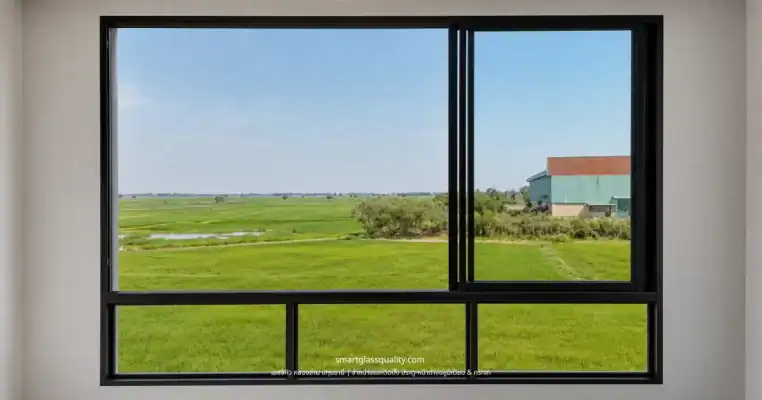
- Sliding windows are designed for easy opening and closing, while allowing outdoor air to flow into the home effectively.
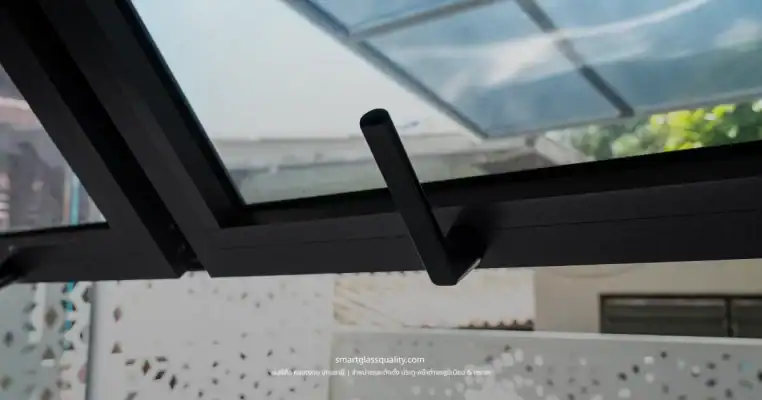
- Awning windows help direct airflow into the home, even when opened only partially.
- Casement windows can open wider than other types, making them ideal for natural ventilation.
Aluminum properties and ventilation work excellently together because aluminum’s lightweight nature allows for a wide range of window designs, helping reduce heat buildup inside the home.
Tip: Installing windows in suitable directions, such as north and south, helps improve airflow through the home and reduce indoor temperatures.
How Does Heat-Insulating Glass Help Reduce Temperature?
The right type of glass enhances the performance of aluminum frames. Low-E Glass can reflect up to 70–80% of heat radiation, double-glazed IGU glass has an air gap that helps reduce heat transfer, while reflective glass reduces sunlight and UV rays.
- Heat-insulating glass (Low-E Glass) is coated with a special layer that helps reflect heat radiation away from the home.
- Double-glazed glass (Insulated Glass Unit – IGU) has an air gap that helps reduce heat transfer.
- Reflective glass helps reduce sunlight and UV rays entering the home.
Heat-insulating glass helps save energy by blocking up to 70–80% of heat radiation from sunlight. Using these special glass types together with aluminum frames helps create a complete heat protection system → See the aluminum window guide
Position Aluminum Windows to Capture Natural Airflow
Positioning windows in the right direction is the most cost-effective way to keep the home cool without relying on air conditioning, as it allows natural airflow to pass through the house more effectively.
Why Is Installing Windows in the North-South Direction Better Than Other Directions?
The north-south direction is the wind path that helps airflow pass through homes throughout the year in Thailand. During summer, south-facing windows can receive the southwest monsoon breeze, while in winter, north-facing windows can receive the northeast monsoon breeze. This helps release heat from the house all year round.
Benefits of Installing Windows in the North-South Direction
- Receives natural airflow better than the east-west direction.
- Helps release heat from the house efficiently.
- Reduces heat buildup inside the home.
Avoid the East-West Direction, But What Should You Do If It Is Necessary?
The east-west direction receives strong sunlight throughout the day, making the house hotter because sunlight passing through the glass creates a greenhouse effect. If it cannot be avoided, consider using awnings, heat-insulating glass, or planting trees to provide shade.
If windows must be installed in areas exposed to strong sunlight, consider the following:
- Install awnings or sunshade panels.
- Choose heat-insulating window glass.
- Plant trees to help provide shade.
- Use curtains or blinds to block sunlight.
Wind Direction Helps Ventilate Air and Reduce Indoor Temperature
Using wind direction to support ventilation helps keep the home naturally cooler without needing to turn on fans or air conditioning all day.
- The main wind directions in Thailand are from the south during summer and from the north during winter.
- Windows installed in the right direction help allow wind to pass through and reduce heat buildup inside the home.
- Use heat-reflective materials such as aluminum and Low-E glass or green-tinted heat-reducing glass to help reduce heat absorption from outside.
How Does Cross Ventilation Design Help Keep the Home Cool?
Cross Ventilation is a design that places air inlet and outlet openings opposite each other, allowing air to flow through smoothly. Simply installing windows on two sides of the room can help reduce indoor temperature effectively without needing to run the air conditioner all day.
- Install windows on two opposite sides of the room to allow air to flow from one side to the other.
- Use louvered windows or awning windows to control wind direction and allow airflow even in narrow spaces.
- Add upper ventilation openings, such as transom vents above doors or windows, to allow hot air to rise and escape.
Additional Tip: If space is limited, you can use an exhaust fan to help improve air circulation. Planting trees around the house can also help provide shade and reduce the outdoor temperature around the home.
How Can You Improve Existing Aluminum Windows Without Removing Them?
For existing homes, ventilation efficiency can be improved without removing everything, such as by changing sliding windows to casement windows or adding ventilation openings above the windows.
- Change from sliding windows to casement windows to allow airflow through the full window area.
- Install additional ventilation openings above the windows.
- Use an exhaust fan to support the Cross Ventilation system.
- Install additional transom openings to support ventilation.
Additional Tip: If west-facing windows cannot be avoided, it is recommended to use heat-insulating glass or sun-blocking curtains to reduce heat entering the home → What to Know Before Switching to Aluminum Windows
4 Ways to Install Aluminum Windows for Better Ventilation, a Cooler Home, and Reduced Air Conditioner Use
Installing aluminum windows for maximum results depends on the number of installation points and their positions. There are 4 main methods, each offering different ventilation efficiency.
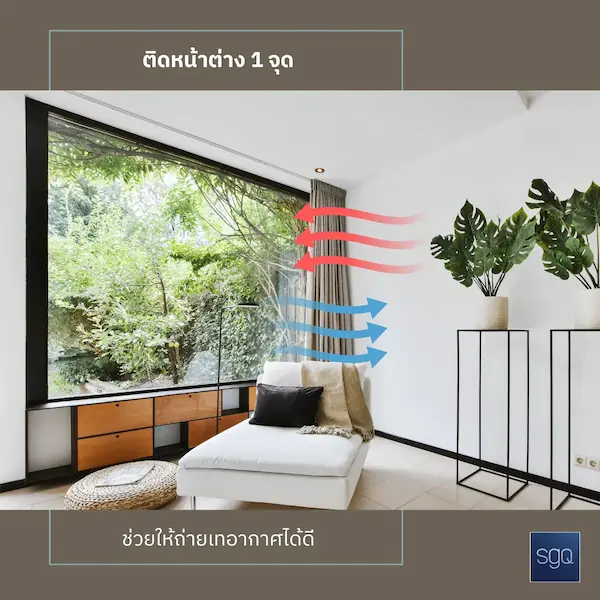
1. Which Rooms Are Suitable for Installing Windows at 1 Point?
Installing a window at 1 point is the most basic layout. Cool air from outside enters through the lower part, while hot air rises upward. This setup is suitable for small rooms that only need basic air circulation.
How It Works: Cool air from outside enters through the lower part of the window. The lighter hot air rises upward and is then replaced by cooler air.
Advantages: Easy to use, convenient to install, and suitable for small rooms such as bathrooms and storage rooms. It helps provide a basic level of air circulation.
Limitations: The air exchange rate is still not as effective as using multiple ventilation points, so hot air may remain inside the home.
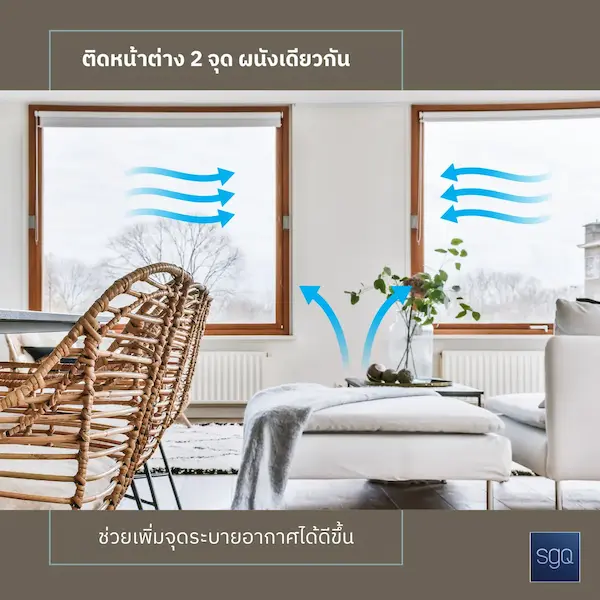
2. How Is Installing Windows at 2 Points on the Same Wall Better Than 1 Point?
Installing 2 windows on the same wall increases the area for air to enter and exit, allowing more airflow and helping reduce mustiness. This setup is suitable for bedrooms or living rooms that need better ventilation.
How It Works: Installing two windows on the same wall helps increase the area for air to enter and exit, allowing more wind to flow in compared to installing only 1 window point.
Advantages: Helps improve air circulation better than installing only one window point, reduces mustiness, and makes the room feel more open and airy. Suitable for areas that need ventilation, such as bedrooms and living rooms.
Limitations: It still cannot fully draw air through the house and is not suitable for areas that require fast ventilation.
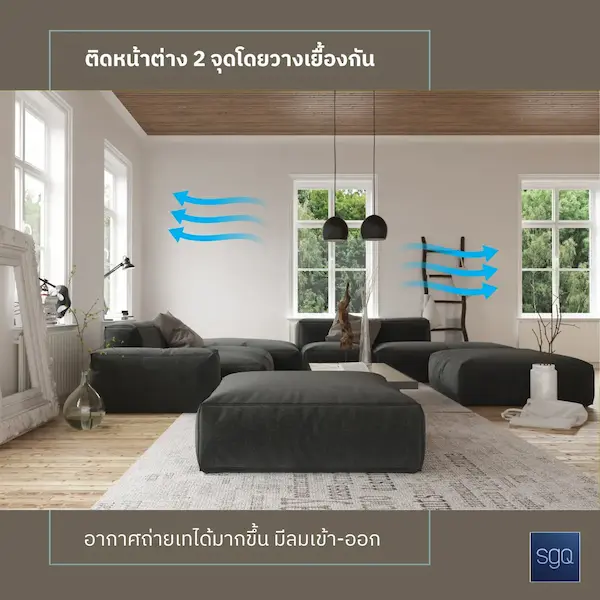
3. How Does Installing Windows at 2 Offset Points Help Improve Ventilation?
An offset window layout helps create better airflow direction than installing windows on the same wall. Air moves from one point to another, helping push hot air out more effectively. This setup is suitable for medium to large areas.
How It Works: Install 2 windows with their positions offset from each other. This helps create better airflow direction than installing them on the same wall. Air moves from one point to another, helping push hot air out of the house effectively.
Advantages: Helps air circulate naturally, releases indoor heat to the outside effectively, and is suitable for medium to large areas such as living rooms and kitchens.
Limitations: The design requires proper calculation of wind direction. If the space is not suitable, an additional fan may be needed to support ventilation.
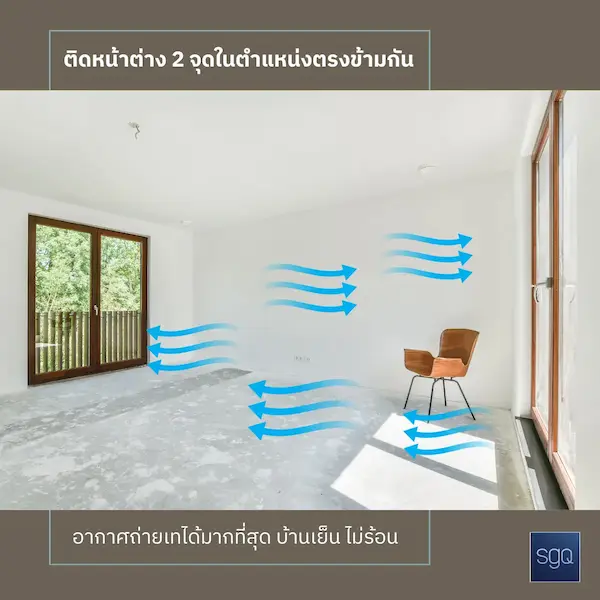
4. Why Is Installing Windows at 2 Opposite Points (Cross Ventilation) the Best Option?
This is the best design for home ventilation. Air enters through one window and exits through the other side, helping keep the home as cool and comfortable as possible without relying on air conditioning all day.
How It Works: Install windows in opposite positions so air can enter and exit easily. Wind flows in through one window and out through the other side, creating the most effective ventilation system because air can pass fully through the home.
Advantages: This design helps keep the home coolest, improves airflow, and reduces heat buildup inside the house. It is suitable for all areas, especially living rooms.
Limitations: Wind direction must be planned carefully for maximum efficiency. Curtains or awnings may be needed to protect against strong wind or outdoor dust.
How to Choose the Best Position for Installing Aluminum Windows to Keep Your Home Cool
Summary of Installation Methods Based on Needs:
- Basic ventilation → Install at 1 point
- More airflow in and out → Install at 2 points
- Same-wall points with better air circulation → Install at 2 points
- Best air exchange → Install 2 opposite points (Cross Ventilation)
Choose the Right Aluminum Window Profile for Hot Homes to Keep the House Cooler and Save Energy
Choosing the right window type for each area and usage directly affects ventilation efficiency and the overall coolness of the home. There are 3 main popular types of aluminum windows.
How Do Awning Windows Allow Airflow Even When It Rains?
Awning windows open outward at a 30–45 degree angle, allowing them to catch more breeze into the home while also helping block rain splash at the same time. They are suitable for bathrooms, kitchens, and areas that require constant ventilation.
Key Feature: Good airflow, can be opened even when it rains.
- It allows outdoor air to flow in effectively and can still provide ventilation even when it rains.
- Opening outward at a 30–45 degree angle helps catch more breeze into the home.
- Helps reduce mustiness and humidity, making it suitable for bathrooms, kitchens, and areas that need ventilation.
Advantage: Allows more airflow than sliding windows and helps keep the home cooler because air can flow in directly. It also helps prevent rain from splashing into the house because the sash opens outward at an angle.
Disadvantages: Requires enough space for the window sash to open outward. It may not be suitable for high-rise buildings exposed to strong winds, as the wind may cause the sash to shake.
Suitable For: Homes that need natural ventilation and want to reduce air conditioner use, as well as bathrooms and kitchens that require constant airflow.
How Do Sliding Windows Save Space?
Sliding windows use a track system, so they do not require swing space. They are suitable for condos or homes with limited space, but they can receive airflow through only half of the window opening. If installed on a sun-facing side, they should be used together with Low-E glass.
Key Feature: Easy to install and requires less space.
- Uses a sliding track system, making it easy to open and close while saving space. Ideal for homes with limited space.
- Can be easily fitted with insect screens to help keep insects out.
Advantages: Easy to install, space-saving, suitable for condos or homes with limited installation areas, and more affordable than casement windows.
Disadvantages: Allows less airflow than awning and casement windows because only half of the window area can be opened. Dust may also build up in the sliding track, so regular cleaning is needed.
Suitable For: Condos or homes that need heat-insulating aluminum window profiles in limited spaces, as well as bedrooms or rooms where strong airflow is not preferred.
How Do Casement Windows Provide the Best Ventilation?
Casement windows provide the fullest airflow among the 3 window types. They help improve ventilation, reduce mustiness, and lower air conditioner use. They are suitable for spacious homes that need full Cross Ventilation.
Key Feature: Provides the best ventilation.
- Can be fully opened, allowing the maximum amount of airflow into the home.
- Helps improve air circulation and reduce mustiness inside the home.
Advantages: Allows maximum airflow, provides the best ventilation, helps reduce heat and lowers the need for fans or air conditioning, while also helping block outside noise effectively.
Disadvantages: Requires enough space for the window sash to open fully. Not suitable for narrow spaces or high-rise buildings exposed to strong winds.
Suitable For: Homes with spacious areas that need full airflow, as well as homes that focus on Cross Ventilation or cross-flow air circulation.
Comparison of 3 Types of Aluminum Windows
-
Awning windows are suitable for rooms that need good ventilation and can still be opened even when it rains.
- Sliding windows save space and are easy to install, but allow less airflow than casement windows.
- Casement windows provide the best airflow and are suitable for homes that need full ventilation.
🪟 Choose the Right Aluminum Windows for Your Home. Consult SGQ Today.
ORM | Fuji Metal | Schimmer — Complete Options for Awning, Sliding, and Casement Windows
Low-E Glass | Double-Glazed Glass | Reflective Glass — All Types Available with Installation Service
Additional Techniques to Keep Your Home Cool and Save Electricity in Summer
In addition to choosing the right window type and aluminum window installation position, you can make your home even cooler by using additional techniques that help reduce heat and improve ventilation. These methods can help reduce energy use and make your home more comfortable, even on extremely hot days. Here are 3 additional techniques that can truly help reduce heat without requiring a large investment.
How Do Planting Trees or Installing Sunshade Louvers Help Reduce Heat?
Large trees on the west side help filter sunlight before heat reaches the walls, while sunshade louvers or awnings help reduce heat buildup around windows and doors without requiring changes to the existing structure.
- Trees and wooden louvers can help filter sunlight before heat enters the house.
- Large trees provide shade and help reduce the temperature around the house.
- If there is no space for planting trees, sunshade louvers or awnings can be installed to help reduce heat buildup on the house walls.
Recommended Options: Plant large trees on the west and south sides of the house to help block afternoon sunlight. Install sunshade louvers or awnings around windows and doors to reduce direct sunlight. This helps reduce air conditioner use because the home becomes naturally cooler.
How Many Degrees Can Light-Colored Exterior Paint Help Reduce Temperature?
Light colors such as white, cream, and light gray reflect heat better than dark colors. They can help reduce wall surface temperature by up to 5–10°C, which helps lower the indoor temperature and allows the air conditioner to work less.
- Light-colored exterior paints, such as white, cream, and light gray, help reflect heat away from the house.
- Dark colors, such as black, dark gray, and navy blue, absorb heat and make the house heat up faster.
Recommended Option: Use heat-reflective paint to help reduce wall surface temperature by up to 5–10°C, lower heat buildup inside the house, and reduce the workload of the air conditioner. This helps keep the home cooler without relying too much on air conditioning.
How Do Ceiling Fans Help Reduce Air Conditioner Use?
Ceiling fans distribute air throughout the home, improving circulation and reducing stuffiness without needing to lower the air conditioner temperature. In summer, the fan should rotate counterclockwise to push cool air downward.
- Ceiling fans help distribute air inside the home, improving air circulation.
- They help reduce the feeling of heat and stuffiness in the room without needing to set the air conditioner too high.
Recommended Option: Set the ceiling fan to rotate counterclockwise in summer to push cool air downward. This helps the room feel cooler without lowering the air conditioner temperature, which can significantly reduce electricity costs.
Simply choosing the right installation points for aluminum windows can truly help keep your home cooler and save electricity.
Proper aluminum window design and installation, combined with heat-insulating glass and additional cooling techniques, can help keep the home cool and comfortable even during extremely hot summer days.
If you are looking for high-quality aluminum windows, SGQ Khlong Sam provides complete aluminum door and window installation services, along with aluminum profiles from leading brands such as RM, Fuji Metal, and Schimmer. This allows you to choose materials that help keep your home cooler more efficiently. Consult SGQ Khlong Sam for installation advice | View high-quality aluminum window profiles at SGQ
📖 Related Articles
Aluminum Window Guide: Which Type Is Right for Your Home?
From installation planning to choosing the right window profiles and systems for every area of your home.
Where Should You Buy High-Quality Aluminum Profiles?
Find standard-quality aluminum window profiles from ORM, Fuji, and Schimmer at SGQ.
Things You Should Know Before Replacing Doors and Windows with Aluminum
Plan Every Detail Before Installing New Aluminum Windows
What Factors Affect the Cost of Aluminum Door and Window Installation?
Understand the pricing structure before deciding to install new windows.
Summary: Installing Aluminum Windows to Keep Your Home Cool and Save on Electricity Bills
- North-south direction is best — receives monsoon winds throughout the year and reduces heat buildup.
- Cross Ventilation — install windows on 2 opposite sides for the best airflow.
- Low-E glass — reduces heat by 70–80% and can truly help save on air conditioning costs.
- Awning/Casement windows — provide better airflow than sliding windows and are suitable for spacious areas.
- Additional techniques — trees/sunshade louvers + light-colored paint + ceiling fans.
- SGQ Khlong Sam — ORM/Fuji/Schimmer aluminum window profiles available with installation service.
Frequently Asked Questions: Installing Aluminum Windows to Keep Your Home Cool
1. Which Direction Is Best for Installing Aluminum Windows to Keep the Home Cool?
The north-south direction is best because it is the direction where wind flows throughout the year in Thailand. In summer, the home can receive the southwest monsoon breeze from the south, while in winter, it can receive the northeast monsoon breeze from the north. This helps release heat from the house all year round without relying too much on air conditioning.
2. How Is Low-E Glass Different from Regular Glass for Hot Homes?
Low-E glass is coated with a special layer that helps reflect up to 70–80% of heat radiation away from the home, while still allowing natural light to enter as usual. Regular glass, on the other hand, allows most heat to pass through, which can lead to significantly lower air conditioning costs in the long term when using Low-E glass.
3. What Is Cross Ventilation, and How Should Windows Be Installed for the Best Results?
Cross Ventilation is a design that creates air inlet and outlet openings on opposite sides. This can be done by installing 2 windows on opposite walls of the room. Air flows in from one side and exits through the other, helping release heat effectively without needing to turn on the air conditioner. It is most suitable for living rooms and main areas of the home.
4. Which Provides Better Airflow: Awning Windows or Casement Windows?
Casement windows provide better airflow because they can open wider. However, awning windows have an important advantage: they can be opened even when it rains because the sash opens outward at an angle and helps block rain splash. They are suitable for bathrooms, kitchens, or areas that require constant ventilation, while casement windows are ideal for spaces that need full Cross Ventilation.
5. What Should You Do If Your House Faces West to Keep It from Getting Too Hot?
There are several ways to help reduce heat, such as installing awnings or sunshade panels above the windows, choosing Low-E glass or reflective glass to reduce heat entering the home, planting trees on the west side to block afternoon sunlight, using curtains or blinds indoors for added protection, and applying light-colored exterior wall paint to reflect heat.
About the Author
This article was written by the SGQ Khlong Sam team, a full-service supplier and installer of aluminum windows, based on real experience in providing advice on choosing and installing aluminum windows to help reduce heat and save energy for homeowners in Pathum Thani and nearby areas across many projects.
🪟 Heat-Insulating Aluminum Windows, All in One Place at SGQ Khlong Sam
ORM | Fuji Metal | Schimmer — Awning, Sliding, and Casement Windows
Low-E Glass | Double-Glazed Glass | Reflective Glass — Available with Installation Service
📍 19/60-61 Moo 7, Khlong Sam, Pathum Thani | Open Monday–Saturday, 08:00–17:30
For Aluminium Contractors & Installers
If you need aluminium profiles, quality glass, premium hardware, custom cutting & fabrication, installation tools, or on-site technical advice,
you can contact us at:
• Line : https://lin.ee/Wkn1Ong
• Tel : 081-885-2629
• Facebook : Smartglassquality
For Homeowners & Project Owners
If you are looking for aluminium door–window installation, glass works, sliding and swing systems, room partitions, or high-quality materials for home renovation
you can contact us at:
• Line : https://lin.ee/Wkn1Ong
• Tel : 099-392-1963 , 097-936-1449