News&Knowledge from SgQ
Exterior waterproof silicone: find the root cause of the leak first, then seal it with the right type.
Based on the installation experience of the SGQ Khlong Sam team, 80% of water leakage problems around aluminum doors and windows are caused by deteriorated silicone sealant—not by EPDM rubber or the frame itself. Choosing the wrong type of silicone can cause it to dry out, crack, or peel off faster than normal. Before buying sealing silicone, you need to identify the root cause first.
✍️ Written by: SGQ Team (SmartGlassQuality Khlong Sam)
📅 Last updated: May 19, 2026
- Why 80% of Leaks Come from Silicone Failure
- How to Locate the Leak Before Applying Silicone
- Choosing the Right Silicone: 4 Main Types
- Silicone Selection by Application Area
- Techniques for a Clean, Long-Lasting Silicone Bead
- Silicone vs. EPDM Rubber Seal: Different Roles
- Summary: Silicone Fixes That Actually Work
- Frequently Asked Questions (FAQ)
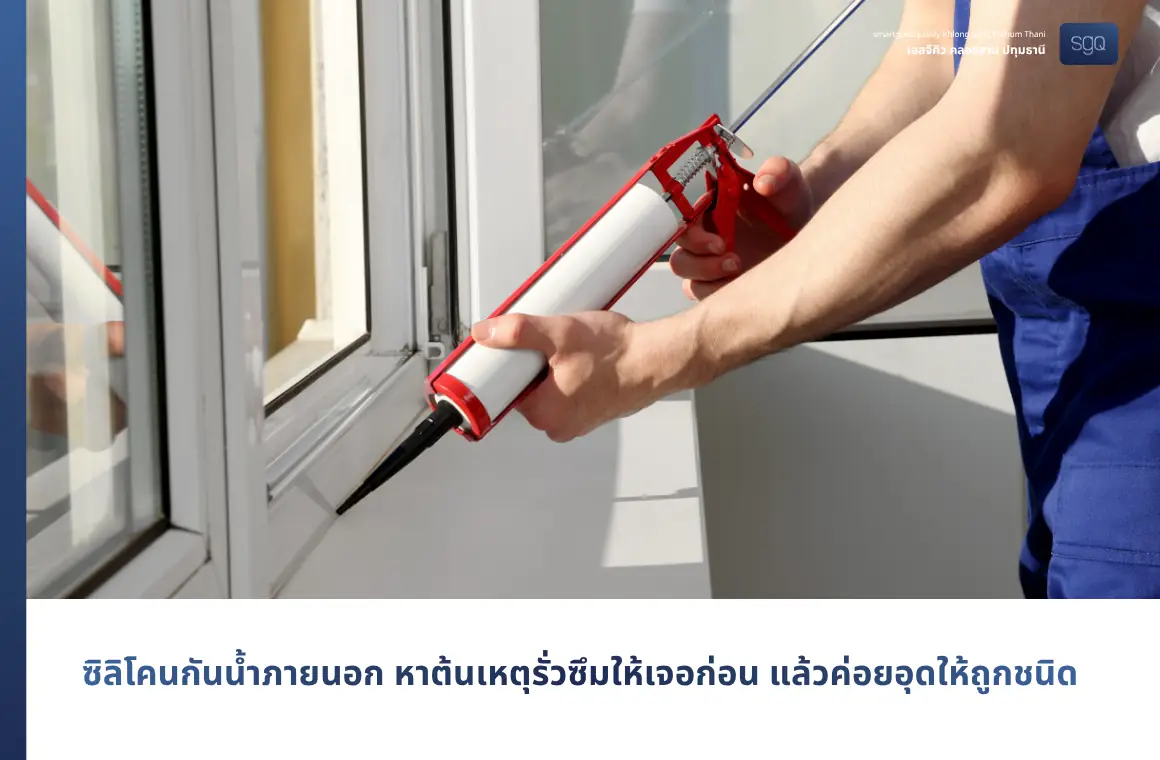
When it rains and water seeps into the house through the window frame, it is a classic problem many homes face. It is often fixed by applying a new layer of silicone over the old one without finding the real cause. As a result, the new silicone peels off within 1–2 years, and the problem comes back again.
This guide will help you: (1) find the leakage point before applying silicone, (2) understand which type of silicone is suitable for exterior use, and (3) know when to fix it yourself or call a technician. It is based on real experience from SGQ technicians who have solved silicone-related problems in many projects.
This article focuses on “diagnosing and identifying the root cause of leakage.” For a comparison table of all silicone types and detailed application techniques, see: Techniques for choosing the right silicone for outdoor aluminum work.
💬 Can’t find the leakage point, or not sure which area needs fixing?
The SGQ team provides a free inspection and assessment at no cost.
💬 Line: @sgqklongsam |
📞 081-885-2629
Why 80% of leakage problems come from silicone, not the frame or glass
When water seeps into the house through the window frame, most people usually think of cracked glass or damaged aluminum frames first. In reality, however, both the glass and frame are often not the main cause. Deteriorated silicone sealant, which quietly wears out over time and from sunlight exposure, is the real culprit in almost every case. Based on SGQ’s inspections across many projects, the actual causes of leakage problems can be divided as follows:
🔬 Low-quality silicone in Thailand’s weather conditions, where temperatures shift between hot and cool every day, such as 35°C during the day and 22°C at night, repeatedly expands and contracts. This can cause cracks within 3–5 years. High-quality modified silicone can last 10–15 years under the same conditions.
How to find the leakage point before applying silicone — do this every time
Do not rush to apply silicone over the old sealant right away. If you cannot find the actual leakage point, sealing it will not solve the problem. This step takes no more than 20 minutes but can help save a lot on repeated repair costs.
Test with a hose before repairing
Use a hose to spray water on each area one section at a time. One person should spray water from the outside, while another person checks from the inside to see where the water is seeping in.
- Always start from top to bottom. Spray the joint between the frame and the wall first, then move down to the glass joint.
- Water seeps in immediately when spraying the glass-to-frame joint = the glass silicone has deteriorated.
- Slow water seepage, or seepage when spraying water at the frame-to-wall joint, means the silicone sealant has deteriorated.
- Water seeps in slowly, or only when spraying the frame-to-wall joint = the sealant silicone has deteriorated.
Visual check: Is the existing silicone still in good condition?
Check the condition of the existing silicone before making a decision:
- If the silicone is cracked or has pulled away from the surface, the entire seal line must be replaced.
- Black silicone with mold stains means it must be completely scraped out, not sealed over.
- If the silicone looks fine but still leaks, there may be air gaps inside. It must be scraped off and reapplied.
⚠️ Do not apply new silicone over the old silicone without scraping it off first! New silicone will not bond properly to deteriorated old silicone. The old silicone must be completely removed, and the surface must be cleaned and fully dried before applying new silicone.
Choose the right silicone: comparison table of 4 main types
There are 4 main types of silicone on the market. However, for all exterior applications, you should use only Neutral Silicone or Modified Silicone. Do not use acid-cure silicone (GP) with aluminum or concrete, because acetic acid can corrode the surface and cause the seal to loosen faster.
For damp areas such as bathrooms or balconies where water may accumulate, choose Anti-Fungal Silicone to prevent black mold stains. For areas directly exposed to sunlight, choose Modified Silicone, which offers longer-lasting UV resistance.
💡 From SGQ technicians’ experience:
Acid-cure silicone (GP) has a sour smell during application because it contains acetic acid.
If you notice this smell during exterior work, stop immediately. It is definitely the wrong type.
→ See the full silicone comparison table with recommended models
Choose silicone based on the application area using the water test result
After testing with water and identifying where the leak is, always choose silicone based on the actual problem area. Do not buy silicone only based on a shop’s recommendation without knowing the leakage point. The wrong type of silicone may dry and adhere well at first, but it can deteriorate much faster than it should. Use the table below as a guide.
Techniques for applying silicone neatly, making it last longer, and preventing peeling
Once you have found the leakage point and chosen the right type of silicone, proper application is just as important. Even high-quality silicone can peel off quickly if applied incorrectly.
The first step you must not skip is scraping off all old silicone. Then wipe the surface with 70% alcohol or higher and let it dry completely for at least 10–15 minutes before applying new silicone. If there is still moisture or oil residue on the surface, the silicone will not bond as well as it should.
The ideal joint size for applying silicone is 6–12 mm. If the joint is too narrow, the silicone will not have enough space to handle expansion and contraction. If the joint is wider than 15 mm, a backup rod must be inserted first. Otherwise, the silicone will sink inward and will not form the correct shape.
After applying silicone, smooth the seal with your finger or a trowel lightly dipped in soapy water. This helps create an even silicone surface and improves adhesion to both edges. Then allow it to cure for at least 24 hours before water exposure, and 48–72 hours for full strength.
💧 Can’t find the leakage point, or is the silicone deteriorated in several areas? Let SGQ technicians help.
Free leakage inspection and assessment | Silicone repair based on the actual problem areas
No sealing over old silicone. No repeated repairs. Choose the right silicone type from the start.
Silicone and EPDM sealing rubber have different roles do not confuse them
In addition to silicone sealant, aluminum work also uses EPDM rubber, which many people mistakenly think is the same component. This misunderstanding often leads to fixing the wrong problem area. Here is a simple summary in table form:
High-quality EPDM rubber has a service life of 15–20 years. However, if the surrounding silicone deteriorates first, water can still seep in. This is why 80% of leakage problems come from silicone, not EPDM rubber. Replacing EPDM rubber without fixing deteriorated silicone will not truly solve the problem. → Information on sealing materials and aluminum profile thickness
📖 Related Articles
Waterproof silicone selection tips: comparison table of all types and recommended models
Continue from this article and view the complete table of Neutral, Modified, and Anti-Fungal silicone types with recommended models.
SGQ Khlong Sam aluminum installation and repair services
Can’t find the leakage point, or is the silicone deteriorated in several areas? Let SGQ technicians inspect and repair the actual problem areas.
Standard aluminum profile thickness and sealing materials
Information on sealing materials and aluminum profiles that affect waterproofing performance
Summary: How to fix silicone sealing issues effectively
- 80% of leakage problems come from silicone — always find the leakage point with a hose test first.
- Do not apply new silicone over old silicone — scrape it off, wipe with alcohol, let it dry, then apply new silicone.
- For all exterior applications, use Neutral or Modified Silicone only. Do not use acid-cure silicone (GP).
- For damp areas / bathrooms, use Anti-Fungal Silicone.
- High-quality silicone can last 10–15 years, while low-quality silicone can crack within 3–5 years under Thai sunlight conditions.
- EPDM rubber ≠ silicone — they are different components with different roles. Do not confuse them or fix the wrong point.
📋 View the complete silicone comparison table and detailed application techniques here: Complete guide to choosing waterproof silicone
Frequently Asked Questions: Waterproof Silicone for Aluminum Work
1. Can silicone be applied over the old sealant if you don’t want to scrape it out?
It will not work. New silicone will not bond properly to deteriorated old silicone. The old silicone must be scraped off completely, wiped with alcohol, allowed to dry, and then reapplied. If new silicone is applied over the old sealant, it may peel off again within 6–12 months, causing unnecessary repeat repair costs.
2. Acid-cure silicone is cheaper. Can it be used for exterior applications?
It is not recommended. Acid-cure silicone (GP) contains acetic acid, which can corrode concrete surfaces and some metals, causing the bond to loosen faster. You can identify it by its sour smell during application. For all exterior applications, always use Neutral or Modified Silicone, even though the price may be slightly higher.
3. Why does silicone turn black, and can it be fixed?
Black stains are caused by mold. They often occur in areas with standing water, poor ventilation, or low-quality silicone without anti-fungal additives. The correct solution is to scrape off the entire seal line, clean the surface with disinfectant, and apply new Anti-Fungal Silicone. Applying new silicone over the old one will not work in this case.
4. Which silicone color is best for white window frames?
White or clear silicone can be used. White looks cleaner in the long term, while clear silicone is suitable for work that needs to hide the sealant line. However, what matters more than the color is the type of silicone — it must be neutral-cure silicone, not acid-cure silicone, especially for exterior work.
5. Not sure whether to hire a technician or do it yourself?
Small silicone sealing jobs where the leakage point has already been found can be done by homeowners themselves if the correct steps are followed. However, if the leakage covers a wide area, the leakage point cannot be found, or the leak comes from the structure, it is recommended to call a technician for an inspection first. The SGQ team provides free assessment services for customers in Pathum Thani. Call 081-885-2629.
About the Author
Written and edited by the SGQ Khlong Sam technician team Experienced in many waterproof silicone repair and installation projects across Pathum Thani and Bangkok Information based on real on-site experience and the team’s repair statistics | Last updated: May 19, 2026
💧 Having water leakage problems? Consult the SGQ team today.
SGQ Khlong Sam provides aluminum and glass door and window installation services
For residential homes — free leakage point inspection and assessment with no charge
📍 19/60-61 Moo 7, Khlong Sam, Pathum Thani | Open Monday–Saturday, 08:00–17:30
For Aluminium Contractors & Installers
If you need aluminium profiles, quality glass, premium hardware, custom cutting & fabrication, installation tools, or on-site technical advice,
you can contact us at:
• Line : https://lin.ee/Wkn1Ong
• Tel : 081-885-2629
• Facebook : Smartglassquality
For Homeowners & Project Owners
If you are looking for aluminium door–window installation, glass works, sliding and swing systems, room partitions, or high-quality materials for home renovation
you can contact us at:
• Line : https://lin.ee/Wkn1Ong
• Tel : 099-392-1963 , 097-936-1449