News&Knowledge from SgQ
How Should Installers Recommend Glass Colors to Customers to Balance Design, Lighting, and Budget?
Recommending a glass color should not be based only on which color looks attractive or sells well. Installers should consider the direction of sunlight, the room’s function, the aluminum frame color, privacy requirements, and the customer’s budget. It is also important to clearly explain that “glass color” mainly affects lighting and overall mood, while the “type of glass,” such as tempered, laminated, Low-E, or IGU glass, determines safety, heat insulation, and practical performance.
✍️ Written by: SGQ Team (SmartGlassQuality Khlong Sam)
📅 Last Updated: July 24, 2026
- Why Should Installers Avoid Recommending Glass Colors Based on “Appearance” Alone?
- What Should Installers Ask Customers Before Recommending a Glass Color?
- Divide Customers into 3 Groups and Recommend the Right Glass for Each Group
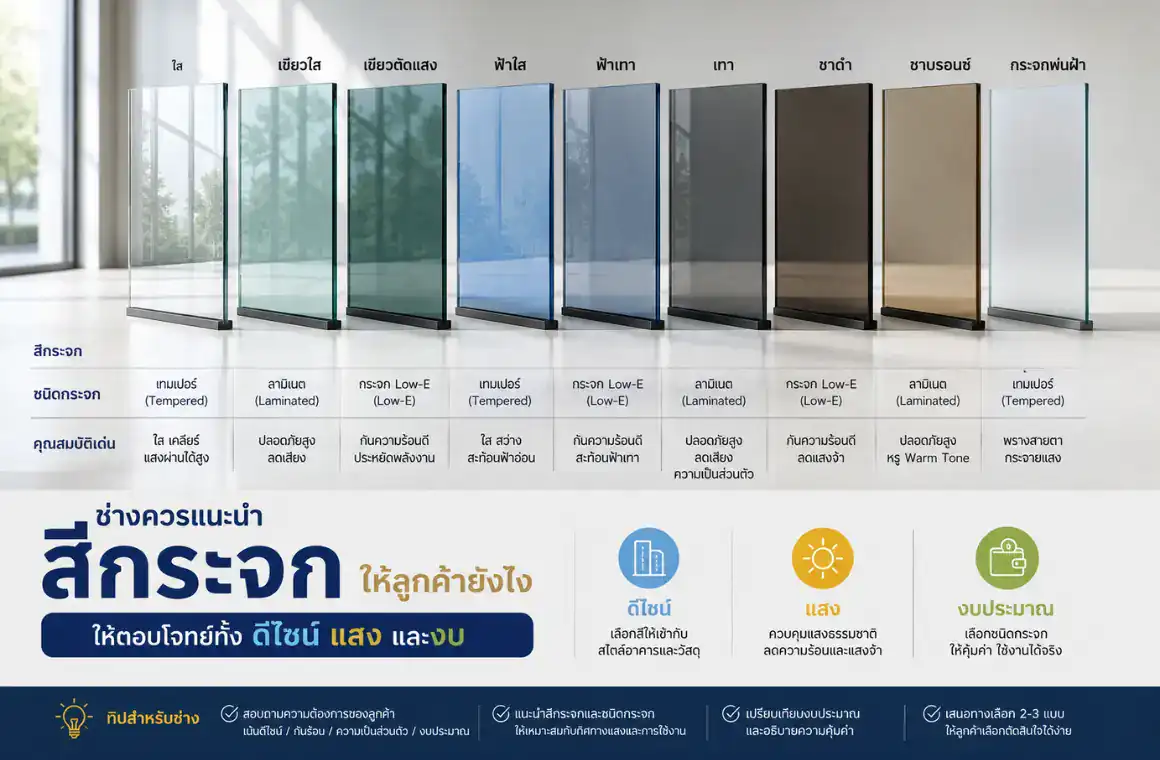
- How to Explain Popular Glass Colors in a Simple Way
- Offer Good / Better / Best Options for Window Glass
- Example Phrases Installers Can Use When Advising Customers
- Common Mistakes Installers Should Avoid When Recommending Glass Colors
- Summary Table: Glass Color Recommendations Based on Customer Needs
- Conclusion: A Professional Approach to Recommending Glass Colors
- Frequently Asked Questions (FAQ)
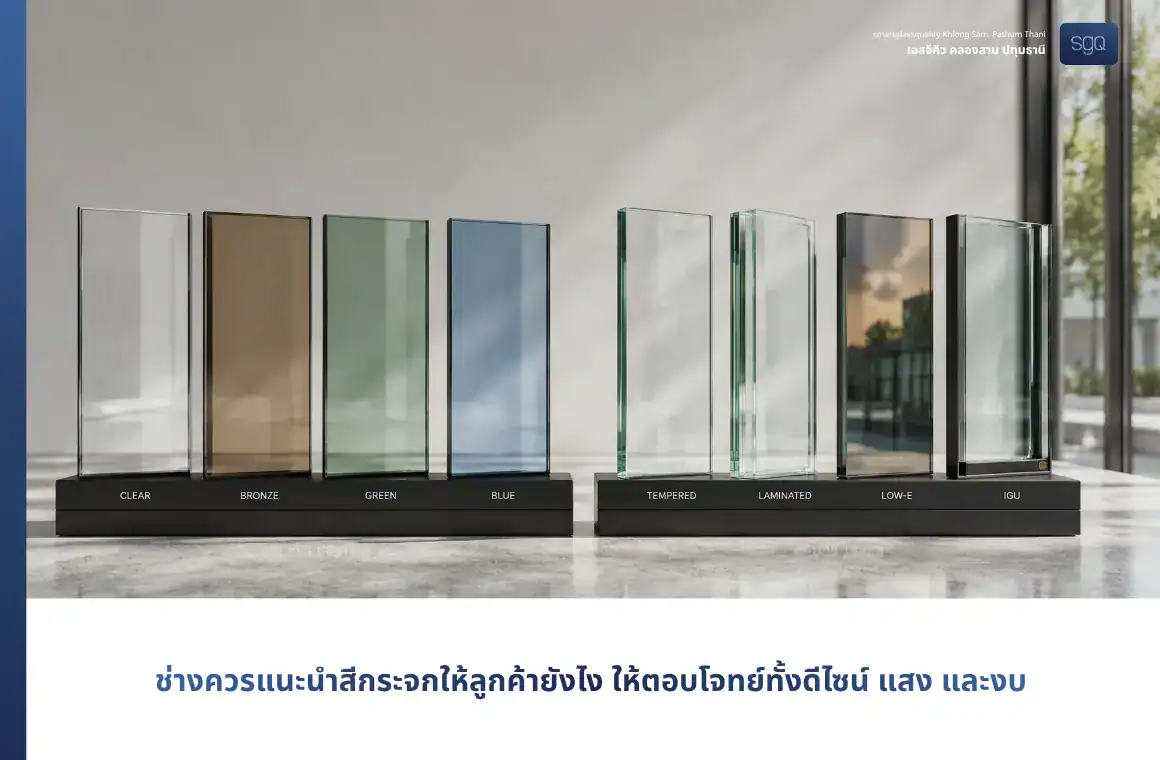
For aluminum door and window projects, one of the most common questions installers hear is, “Which glass color should I choose?” Customers often begin with reference images, model homes, or colors they have seen online and want to create a similar look and feel in their own homes.
However, in real-world installations, glass color should not be selected based on appearance alone. A color that looks good in a photo may make the actual room too dark. Similarly, glass that customers believe provides heat protection may reduce light but still be less effective at blocking heat than glass specifically designed for thermal insulation.
This article is written for installers and contractors as a professional guide to recommending glass colors to customers. It considers sun exposure, home style, frame color, privacy, budget, and practical use to help customers choose the right specifications and reduce the risk of corrective work after installation.
💬 Are your customers asking about glass colors?
Send photos of the project site, the frame color, and the direction of sunlight to the SGQ team for an initial specification assessment.
💬 Line: @sgqklongsam | 📞 081-885-2629
Why Should Installers Avoid Recommending Glass Colors Based on “Appearance” Alone?
Glass color is certainly part of a home’s design. However, if installers make recommendations based only on appearance or popularity, customers may receive an installation that looks good at first but does not meet their practical needs. For example, the room may be too dark, too hot, or lack sufficient privacy.
- A glass color that looks attractive in a sample may not suit the actual lighting conditions of the customer’s home.
- Glass that is too dark may make the home feel dim, especially in small rooms or areas with limited openings.
- Glass that is too clear may allow excessive heat and glare into the home or provide too little privacy from the outside.
- Customers may not yet understand the difference between “glass color” and “glass type.”
- An incorrect recommendation from the beginning may lead to complaints after installation, such as the home being too dark, too hot, or the glass color not matching the frame.
💡 Pro Installer Tip: A good answer is not, “This color looks nice.” Instead, ask, “Which direction does this room face? How will it be used? Does the customer prefer more natural light or greater privacy?”
What Should Installers Ask Customers Before Recommending a Glass Color?
Before recommending a glass color or specification, installers should ask customers about at least seven key factors to ensure the recommendation suits the actual site conditions.
☐ Which direction does the house or room face, such as north, south, east, or west?
☐ Does the customer want the home to feel open and bright, or do they prefer greater privacy?
☐ How will the room be used, such as a living room, bedroom, home office, kitchen, or stair hall?
☐ What aluminum frame color has been selected, such as black, white, gray, champagne gold, or wood grain?
☐ Is the customer concerned about heat, glare, or visibility from outside?
☐ งWhat is the customer’s budget? Do they need to control costs, or are they willing to upgrade selected areas?
☐ Do they need standard, tempered, laminated, Low-E, or additional heat-resistant glass?
💡 If the customer is still unsure which glass color to choose, the installer should begin with the “problem the customer wants to solve.” For example, the home may be too hot or too dark, the customer may want more privacy, or they may want the glass to match black or wood-grain frames.
Divide Customers into 3 Groups and Recommend the Right Glass for Each Group
Customers choose glass for different reasons. Some want a brighter home, some prioritize privacy, while others want to reduce heat. Installers should therefore identify the customer’s main needs before recommending a glass color.
Customers Who Want an Open and Bright Home
These customers often prefer minimalist or modern homes, or spaces designed to receive plenty of natural light. Clear, light green, or light blue glass is recommended because these options create a more open feel and prevent the room from looking too dark.
However, installers should also explain that clear or lightly tinted glass provides less privacy, especially for rooms facing the street or located close to neighboring houses. Curtains, window film, or a different glass type may be needed in certain areas.
Customers Who Want More Privacy
If customers are concerned about people seeing into their homes, bronze, gray, or Euro Gray glass may be recommended. These colors help reduce visibility from outside during the daytime while creating a more premium look and feel.
However, customers should be informed that darker glass allows less natural light into the home, especially in rooms that already receive limited daylight. Instead of using dark glass throughout the entire house, installers may recommend a medium tint combined with sheer curtains or window film in selected areas
Customers Who Want to Reduce Heat Inside the Home
Installers should clearly explain that “glass color” can help reduce glare and adjust the overall mood of the home. However, customers who want effective heat reduction should also consider the glass type and performance specifications, such as Low-E, reflective, or IGU glass, or use window film as an additional solution.
A professional response should not claim that dark-colored glass will definitely block heat. Instead, installers should separate the customer’s needs into two levels: glass color affects light and privacy, while the glass type determines heat reduction, safety, and long-term performance.
How to Explain Popular Glass Colors in a Simple Way
When speaking with customers, installers should use simple, easy-to-understand language instead of starting with too many technical terms. The table below can be used as a quick guide for explaining aluminum window glass colors.
💡 It is recommended to show customers actual glass samples, as colors may appear different in photos, on mobile phone screens, and under showroom lighting compared with how they look after installation.
Offer Good / Better / Best Options for Window Glass
Offering Good / Better / Best options helps customers compare choices based on their budget. It also prevents them from feeling that the installer is only trying to sell the most expensive option and allows the installer to explain the reasons behind each specification more clearly.
💡 การเสนอ Good/Better/Best ช่วยให้ลูกค้าเห็นว่าแต่ละราคาต่างกันเพราะอะไร ไม่ใช่ต่างกันเพราะร้านบวกเพิ่มอย่างเดียวค่ะ
This topic helps professionals present their work more effectively, as customers can clearly see why each price option differs—not simply because the shop has added a higher markup.
🪟 Want to see actual glass samples before making a decision?
SGQ Khlong Sam provides glass samples in every color for professionals and customers to compare in-store.
We also recommend the right specifications based on sun exposure, frame color, and budget.
Example Phrases Installers Can Use When Advising Customers
When a customer asks, “Which glass color should I choose?”, professionals can give a clear, well-reasoned answer and guide them toward the right specifications more easily. For example:
- “If you want the house to feel open and let in plenty of natural light, clear or light green glass would be suitable. However, if this room faces the road, you may also need to consider curtains or additional privacy.”
- “If the house uses wood-grain or warm-toned frames, bronze-tinted glass will match the overall mood well. However, since this room already has limited light, I recommend choosing a lighter bronze tint or comparing actual samples first.”
- “If the main concern is heat, darker glass can help reduce some sunlight. However, for more effective heat protection, I recommend considering Low-E or reflective glass specifically for the sides exposed to strong sunlight.”
- “We can prepare separate Good, Better, and Best quotations for comparison. This allows customers to clearly see what they gain from increasing their budget, such as improved safety, heat protection, or privacy.”
Common Mistakes Installers Should Avoid When Recommending Glass Colors
These mistakes can turn a seemingly minor detail into a problem after installation.
- Claiming that dark-tinted glass definitely reduces heat without explaining the type of glass.
- Recommending a glass color or specification without first asking about sun exposure.
- Failing to explain that dark-tinted glass can make the house feel darker.
- Failing to distinguish between “glass color” and “glass type” when discussing options with customers.
- Not showing customers actual samples before they make a decision, especially for bronze, grey, or Euro Grey glass.
- Failing to clearly specify the details in the quotation, such as color, thickness, glass type, and installation location.
Summary Table: Glass Color Recommendations Based on Customer Needs
What Should Professionals Consider When Recommending a Glass Color?
Professionals should recommend glass colors based on five main factors: sun exposure, room usage, aluminum frame color, privacy, and budget. Glass should not be selected based only on popular colors, because the right glass for one home may not be suitable for another.
Professionals should help customers clearly understand that glass color mainly affects light, mood, and privacy, while the type of glass determines safety, heat insulation, sound reduction, and overall performance in actual use. Once customers understand this difference, choosing the right specifications becomes easier and helps reduce the risk of disappointment after installation.
Need glass samples and specification advice? Consult SGQ.
Professionals and contractors who need help recommending glass colors to customers can send photos of the site, sun exposure details, frame color, and an approximate budget to the SGQ team for an initial assessment. We can recommend suitable options, including tinted glass, tempered glass, laminated glass, Low-E glass, and processed glass for aluminum doors and windows.
📖 Related Articles
Choosing Window Glass Colors for Your Home: Bronze, Blue, or Green Which One Is Best?
An Article for Homeowners — Feel Free to Share It with Customers to Help Them Make an Informed Decision
Types of Glass for Aluminum Work: Complete Guide to Every Type
A Complete Guide to Glass Types: Tempered, Laminated, Low-E, and IGU—How to Choose the Right Glass for Each Application
Aluminum Frame Colors: How to Choose Door and Window Frame Shades That Complement Your Home
Explore frame color options and learn how to match them with glass colors before presenting them to customers.
Does Low-E Glass Really Reduce Heat? Information for Explaining It to Customers
Use this information when customers ask about heat reduction and explain why the type of glass must also be considered.
Summary: Professional Guidelines for Recommending Glass Colors to Customers
- Always ask before making a recommendation—consider sun exposure, room usage, frame color, privacy, and budget.
- Clearly distinguish between “glass color” and “glass type”—color affects light and mood, while the type of glass provides heat reduction and safety.
- Use Good, Better, and Best options—customers can compare choices based on their budget, while professionals can clearly explain the reasons behind each option.
- Show customers actual samples before they decide—especially bronze, grey, and Euro Grey glass, as the colors can look very different in photos compared with real life.
- Include Complete Specifications in the Quotation—Color, Thickness, Glass Type, and Installation Location for Every Panel
- Do Not Claim That Dark-Tinted Glass Always Reduces Heat—Always Explain That the Glass Type Must Also Be Considered
Frequently Asked Questions: Recommending Glass Colors to Customers
1. What Should Professionals Do If a Customer Chooses a Glass Color from an Online Photo?
Explain that the color shown in a photo may look different at the actual site because lighting, cameras, screens, and room conditions can all affect how the color appears. It is recommended to compare an actual glass sample with the frame color and on-site lighting before making a decision, especially for bronze, grey, or Euro Grey glass, as the level of tint can significantly affect the brightness inside the home.
2. What Should You Recommend If a Home Has Limited Natural Light but the Customer Wants More Privacy?
Avoid immediately recommending dark-tinted glass throughout the entire house, as it may make the rooms too dark. Instead, suggest medium or lighter shades, such as light green or light bronze. Clear or lightly tinted glass can also be combined with curtains, window film, or strategic panel placement to improve privacy without making the space feel too enclosed.
3. What Should You Recommend If the Customer Has a Limited Budget but the House Is Exposed to Strong Sunlight?
The specifications should be divided according to the level of risk in each area. For example, areas exposed to strong sunlight or with large openings can use Better or Best specifications, while areas with less sunlight can use standard tinted glass. This approach helps control the overall budget more effectively than upgrading the entire house and is also better suited to actual usage needs.
4. How Should Glass Specifications Be Listed in a Quotation to Avoid Confusion?
The quotation should clearly specify the glass color, thickness, type, and installation location. For example, “6 mm bronze-tinted glass” or “8 mm grey tempered glass for the living room sliding door.” Writing only “bronze glass” may lead customers to assume that all panels use the same specifications.
5. Should the Same Glass Color Be Used Throughout the Entire House?
Not necessarily. A single house can use different glass colors depending on sun exposure and how each room is used. For example, bronze or grey glass can be used at the front of the house for greater privacy, while clear or light green glass can be used at the back of the house or for openings that need more natural light. However, the overall mood should remain consistent with the home’s design.
About the Author
Prepared by the SGQ Khlong Sam Team A supplier of aluminum profiles, processed glass, and door and window hardware. We provide professional advice to technicians and contractors on selecting colors, glass types, and specifications.This information is based on the SGQ team’s real-world experience in consultation and installation project
For Aluminium Contractors & Installers
If you need aluminium profiles, quality glass, premium hardware, custom cutting & fabrication, installation tools, or on-site technical advice,
you can contact us at:
• Line : https://lin.ee/Wkn1Ong
• Tel : 081-885-2629
• Facebook : Smartglassquality
For Homeowners & Project Owners
If you are looking for aluminium door–window installation, glass works, sliding and swing systems, room partitions, or high-quality materials for home renovation
you can contact us at:
• Line : https://lin.ee/Wkn1Ong
• Tel : 099-392-1963 , 097-936-1449