News&Knowledge from SgQ
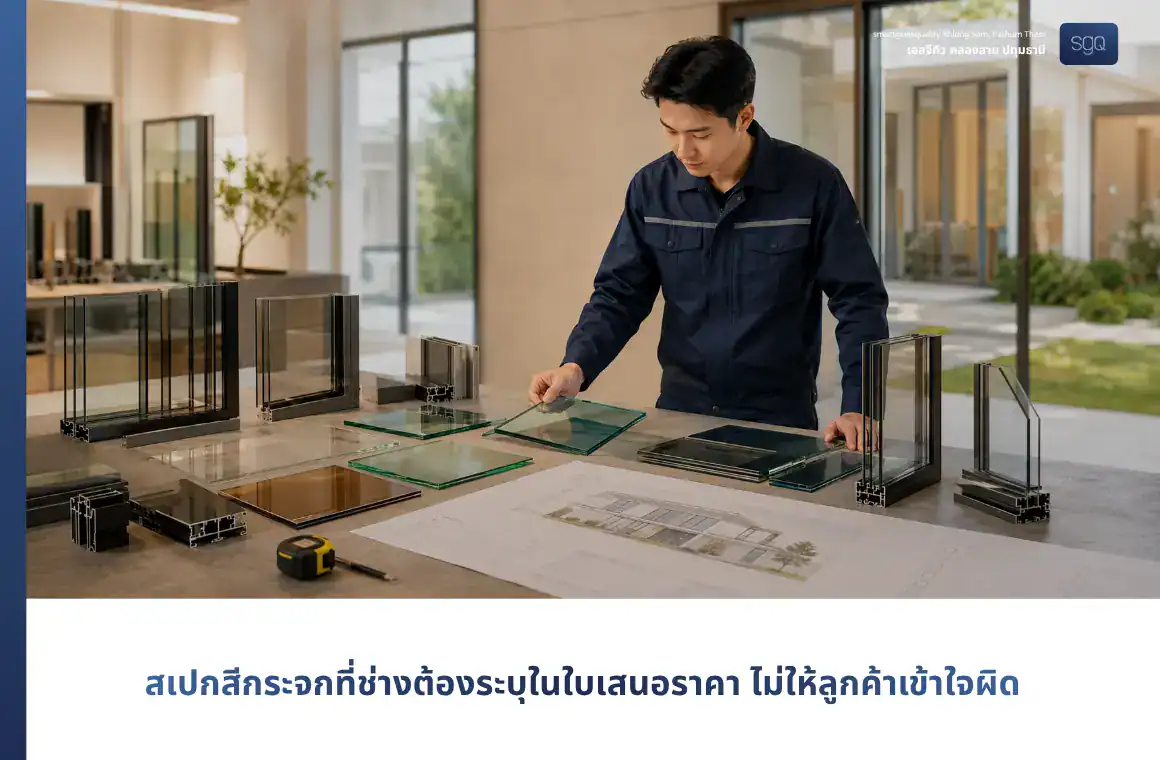
Glass Colour Specifications Contractors Must Include in Quotations to Avoid Customer Misunderstandings
Glass colour specifications in a quotation should include more detail than simply stating “bronze glass” or “green glass.” At least eight details should be specified: colour, thickness, glass type, opening system, installation location, approximate dimensions, number of panels, and the aluminium frame used with the glass. Clear information ensures that the customer and contractor have the same understanding, reduces price changes after specifications are selected, and improves accuracy when ordering, cutting, assembling, and installing the glass.
✍️ Written by: SGQ Team (SmartGlassQuality Khlong Sam)
📅 Last updated: 29 July 2026
- Why Is the Term “Bronze Glass” Not Enough in a Quotation?
- What Should Be Included in Glass Colour Specifications?
- Examples of Vague Specifications vs Clear Specifications
- Same Colour but Different Glass Types: How Do Prices Differ?
- What Must Be Communicated If the Customer Changes the Glass Colour or Type Later?
- Examples of Glass Specification Wording for Quotations
- Checklist Before Sending an Aluminium and Glass Work Quotation
- Conclusion: Clear Glass Colour Specifications Help Reduce Rework
- Frequently Asked Questions (FAQ)
In aluminium door and window projects, terms such as “bronze glass” or “green glass” may sound easy to understand, but they are not detailed enough for an actual quotation. These terms do not specify the glass thickness, glass type, opening system, installation location, or what is included in the quoted price.
If the specifications are unclear, customers may assume that the proposed tinted glass already provides heat protection or is safety glass. In fact, tinted glass, tempered glass, laminated glass, Low-E glass, and IGUs are different specifications with different prices and applications.
This article is written specifically for technicians, contractors, and quotation preparers. It helps organise glass colour specifications clearly from the beginning, reduces follow-up questions and rework, and ensures that customers have a clear understanding before approving the project.
💬 Are you preparing a quotation for aluminium and glass work?
Send the specifications, colour, thickness, opening system, or site photos to the SGQ team for an initial review.
💬 Line: @sgqklongsam |📞 081-885-2629
Why Is the Term “Bronze Glass” Not Enough in a Quotation?
Because colour is only one part of the glass specification and does not describe all the properties of the glass the customer will receive. For example, bronze glass may refer to ordinary heat-absorbing tinted float glass, bronze tempered glass, bronze laminated glass, or another special specification. Each option differs in price, weight, safety performance, and production requirements.
- The thickness is not specified, such as 5 mm, 6 mm, 8 mm, or thicker.
- It does not specify whether the glass is standard float glass, tempered glass, laminated glass, Low-E glass, or an IGU.
- It does not specify whether the glass is intended for a sliding panel, casement panel, fixed panel, door, or side light.
- It does not clarify whether the glass provides actual heat insulation or is simply tinted heat-absorbing glass.
- Customers may assume that safety features or heat-insulating properties are already included in the quoted price.
- If the scope of work is not clearly stated, customers may make inaccurate price comparisons between different suppliers.
💡 Easy to remember: Glass colour affects the mood and partially influences brightness.
However, the glass type determines its performance, such as safety, heat insulation, noise reduction, and structural suitability.
What Should Be Included in Glass Colour Specifications?
A good quotation should allow customers to immediately understand “what type of glass they are buying, where it will be installed, and what is included in the price.” This is especially important for projects involving multiple sets, rooms, or opening systems. Each item should be listed clearly and separately.
☐ Glass colour, such as clear, green, blue, bronze, grey, or Euro Grey
☐ Glass thickness, such as 5 mm, 6 mm, 8 mm, or the thickness specified for the project
☐ Glass type, such as float glass, tempered glass, laminated glass, Low-E glass, reflective glass, or an IGU
☐ Opening system, such as sliding, casement, awning, fixed, or swing door
☐ Installation location, such as the bedroom, front of the house, stair hall, bathroom, or transom above the door
☐ Approximate dimensions, or dimensions based on the drawings or actual site measurements
☐ Number of panels or sets using the same glass specification
☐ The aluminium frame used with the glass, such as the frame colour, frame system, or relevant brand and series
💡For quotations intended for general customers, it is recommended to use easy-to-understand language first, followed by the detailed specifications at the end of the item.
For example: “6 mm bronze glass (tinted float glass).” This is easier for customers to understand than using technical terms alone.
Examples of Vague Specifications vs Clear Specifications
Many contractors keep quotations brief to make them easy to read. However, if the wording is too brief, it may leave room for customer misunderstanding. The following table shows how to make the wording clearer without making the quotation unnecessarily long.
Same Colour but Different Glass Types: How Do Prices Differ?
One common cause of customer misunderstanding is seeing the same specification, such as “6 mm bronze glass,” but receiving different prices from different suppliers. In fact, glass of the same colour may be a different type or may use a different thickness or manufacturing process.
- Standard tinted glass: Suitable for general applications and easier to control within budget, but it does not provide the same level of safety as processed glass.
- Tinted tempered glass: More expensive because it undergoes a heat-treatment process to increase its strength. It is suitable for high-risk areas or certain types of large panels.
- Tinted laminated glass: More expensive because it consists of glass layers bonded with an interlayer film, helping to improve safety if the glass breaks.
- Low-E, reflective, and IGU glass: These must be assessed separately based on the specifications because they involve heat control, surface coatings, and glass construction.
- The glass thickness and dimensions affect the price, panel weight, and the hardware required for installation.
💡 The term “heat-insulating glass” should not be used on its own in a quotation.
The glass type, such as Low-E, reflective, or IGU, should be specified together with the thickness and installation location so customers can compare prices accurately.
What Must Be Communicated If the Customer Changes the Glass Colour or Type Later?
When a customer changes from clear glass to tinted glass, from standard glass to tempered glass, or to Low-E glass after approving the quotation, the contractor should explain the impact before placing the actual order. The specification should not be changed immediately without written confirmation, as the change may affect both the project cost and on-site installation.
- The price may change because different glass colours, thicknesses, and types have different costs.
- The lead time may change, especially for tempered, laminated, Low-E, or IGU glass.
- The panel weight may change, requiring the hardware, rollers, hinges, or frame to support a heavier load.
- The hardware specifications may need to be adjusted according to the actual panel weight and dimensions.
- The actual glass colour may look different from photos displayed on a mobile phone. Customers should therefore be shown a physical glass sample or photos of completed projects for reference.
- The quotation should be updated, or written confirmation of the specification change should be obtained before production begins.
Examples of Glass Specification Wording for Quotations
Contractors can adapt the examples below to suit the actual project, making the quotation look more professional and reducing the risk of misinterpretation.
📋 Not sure whether the customer’s revised specifications will affect the price?
Send the original and revised specifications to SGQ for an initial review before placing the actual glass order.
Checklist Before Sending an Aluminium and Glass Work Quotation
Before sending a quotation to the customer, contractors should review each item carefully, especially for projects involving multiple rooms or opening systems. Small details such as glass thickness or glass type can have a greater impact on the price than many customers may realise.
📋 Checklist Before Sending an Aluminium and Glass Work Quotation
Clear Glass Colour Specifications Help Reduce Rework
A quotation with clearly stated glass colour specifications helps ensure that the customer and contractor have the same understanding before work begins. It prevents confusion over whether the selected glass is standard tinted glass, tempered glass, laminated glass, or a specific type of heat-control glass.
The key is not to write only “bronze glass” or “green glass.” The quotation should clearly specify the colour, thickness, glass type, opening system, installation location, quantity, and pricing terms. When all details are complete, glass ordering, fabrication, and installation can be carried out more accurately, reducing on-site problems caused by misunderstandings.
Need Help Checking Glass Specifications Before Preparing a Quotation? Consult SGQ
Technicians, contractors, and quotation preparers who need help selecting the right glass colour, thickness, or type for aluminium doors and windows can send drawings, specification lists, or site photos to the SGQ team for an initial assessment.
📖 Related Articles
Types of Glass for Aluminum Doors and Windows
An In-Depth Guide to Every Type of Glass—Tempered, Laminated, Low-E, and IGU—for Reference When Writing Specifications in Quotations
How to Recommend Glass Colours That Match the Customer’s Design, Lighting Requirements, and Budget
Read This Before Recommending a Glass Colour to Ensure the Advice Matches the Customer’s Needs Before Adding the Specifications to the Quotation
Suitable aluminum thickness for doors and windows
Use this as a reference when the customer changes the glass specifications in a way that affects the panel weight and aluminium frame.
Choosing Window Glass Colors for Your Home: Bronze, Blue, or Green Which One Is Best?
An Article for Homeowners — Share It with Customers Before They Confirm the Glass Colour in the Quotation
Conclusion: Clear Glass Colour Specifications Help Reduce Rework
- Do not write only “bronze glass” — clearly specify the colour, thickness, glass type, opening system, installation location, and quantity.
- Clearly separate “glass colour” from “glass type” in every item — the same colour can have a significantly different price depending on the glass type.
- Do not use the term “heat-insulating glass” on its own — specify whether it is Low-E, reflective, or IGU glass, together with the thickness and installation location.
- If the customer changes the specifications later, inform them of any changes to the price, lead time, and panel weight, and update the quotation before placing the production order.
- Let the customer view an actual colour sample before confirming — especially for bronze, grey, and Euro Grey glass, as the colour may look very different in photos.
- Clearly state the pricing terms — whether the price includes installation or covers materials or fabrication only.
Frequently Asked Questions: Glass Colour Specifications in Quotations
1. Is it enough to write only “6 mm bronze glass” in a quotation?
It may be sufficient for some basic applications, but it is still unclear if the project requires additional properties such as tempered, laminated, or Low-E glass. It is recommended to specify the glass type, opening system, and installation location to prevent customers from assuming that special properties are already included.
2. What is the difference between 6 mm bronze glass and 6 mm bronze tempered glass in a quotation?
The difference lies in the glass type and manufacturing process. Standard 6 mm bronze glass is tinted glass with the specified thickness, while 6 mm bronze tempered glass undergoes a heat-treatment process to increase its strength. It is therefore more expensive, and the term “tempered” should always be clearly stated in the quotation.
3. If one project uses multiple glass colours or types, should they be listed separately?
Yes. They should be listed separately by set or installation location. For example, bronze glass may be used in the bedroom, clear tempered glass in the living room, and green glass for a fixed-light panel. This allows customers to see the price based on the actual specifications and helps contractors avoid ordering the wrong glass colour.
4. What should be done if the customer changes the specifications after approving the quotation?
The contractor should first explain the potential impact on the price, lead time, panel weight, and related hardware. An updated quotation should then be issued, or written confirmation of the revised specifications should be obtained before production begins, to prevent disputes later.
5. How Should Heat-Control Glass Be Specified to Avoid Ambiguity?
Do not write only “heat-control glass,” as the term can be interpreted in several ways. Specify the type, such as Low-E, reflective, or IGU glass, together with the thickness, colour, installation location, and number of sets. This allows customers to compare prices accurately and prevents them from assuming that all tinted glass provides the same level of heat protection.
6. Should Customers Be Shown Glass Colour Samples Before Confirmation?
Yes, especially for residential projects where customers place importance on the overall atmosphere, frame colour, and room brightness. The actual glass colour may look different from photos on a mobile phone or under showroom lighting. Showing physical samples helps reduce the risk of dissatisfaction after installation and prevents disputes over the selected colour.
About the Author
Written by the SGQ Khlong Sam Team Supplier of aluminium profiles, processed glass, and door and window hardware Providing aluminium and glass consultation services for technicians and contractors
For Aluminium Contractors & Installers
If you need aluminium profiles, quality glass, premium hardware, custom cutting & fabrication, installation tools, or on-site technical advice,
you can contact us at:
• Line : https://lin.ee/Wkn1Ong
• Tel : 081-885-2629
• Facebook : Smartglassquality
For Homeowners & Project Owners
If you are looking for aluminium door–window installation, glass works, sliding and swing systems, room partitions, or high-quality materials for home renovation
you can contact us at:
• Line : https://lin.ee/Wkn1Ong
• Tel : 099-392-1963 , 097-936-1449